How it plays
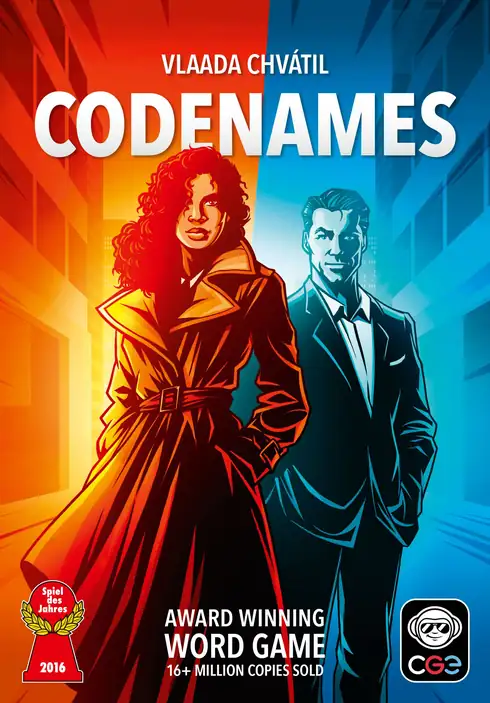
Two teams face a grid of 25 word cards. Only the spymasters can see on a key card which words are their own agents, innocent bystanders or the assassin. Taking turns, they give their team one word and a number, for example “water, 3”: three cards fit the clue. The team guesses card by card and may keep guessing after each correct guess, up to one guess more than the number given. A wrong guess ends the turn; whoever reveals the assassin loses. The first team to find all of its own agents wins.
What it can help develop
The spymasters look for a word that links several of their own words: this calls for word retrieval and association. At the same time, they check all 25 words so that the clue does not touch on the opponents’ words or the assassin. This places demands on working memory; the first idea often has to be rejected (inhibition). Many words have more than one meaning (“bank”, for example, can mean the side of a river or a financial institution), which requires cognitive flexibility. Perspective-taking comes in too: the spymasters judge what the others will understand, and the team reconstructs what was meant.
Especially suitable for
- Teenagers and adults who love words
- Groups of four or more people, larger groups welcome
- Players who enjoy discussion within their team
Less suitable for
- Groups with very different vocabularies
- Two or three players: a special rule exists only in the first edition reviewed
Our verdict
Codenames is a worthwhile choice for groups of four or more people in which teenagers and adults enjoy language and discussion. Its strength: it won the Spiel des Jahres in 2016, and according to the jury the next game often follows immediately. Its limitations are downtime while clues are being given and the differing vocabularies at the table; reviews also disagree on whether it is a family game.
Getting started
- To start, explain the clue “water, 3”: it refers to three cards, and the team guesses card by card.
- Before each clue, go through all 25 words so that it does not touch on the opponents’ words or the assassin.
- Make clear beforehand that revealing the assassin ends the game immediately.
In detail
Variants and player count
According to the publisher, CGE, the current edition comprises 200 cards with 400 code names; the designer is Vlaada Chvátil. According to Wikipedia, the key card shows 9 and 8 agents, 7 innocent bystanders and 1 assassin. The Spiel des Jahres jury gives 4 to 8 people and mentions good variants for two or three. According to Wikipedia, the German edition provides a special rule for this: playing cooperatively against a simulated opponent.
What reviewers say
The Spiel des Jahres jury chose Codenames as Spiel des Jahres 2016; according to Wikipedia, it came second in the Deutscher Spiele Preis 2016, behind Mombasa. According to the jury, the first game is often followed by a second. Hall9000 calls the double-sided cards of the first edition an incentive to play again and finds that the variants for two and three players work in that edition. According to Hall9000, the flow of play stalls while clues are being given, and a weak link slows the group down. Reviewing the first edition, the Reich der Spiele reviewer says that differences in vocabulary and association reduce the fun; he recommends six or more people and does not consider it a suitable family game. Ars Technica names the pace as a weak point, but recommends it as a family game.
How it compares
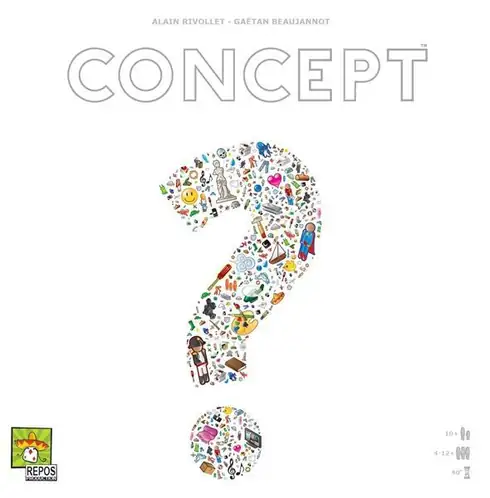
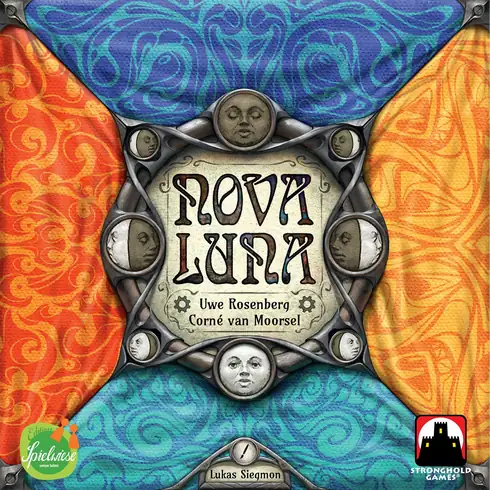
Concept (from age 10, 4 to 12 people, about 40 minutes) has the same three skill areas, flexibility, language and cooperation, and calls for the same three skills: cognitive flexibility, perspective-taking as well as vocabulary and association. Concept can only be played with four or more people; Codenames has a special rule for two or three only in the first edition reviewed. For very literal-minded children, the symbols in Concept feel awkward. Nova Luna (from age 8, 1 to 4 people, about 30 minutes) shares the skill area of flexibility with Codenames and, like Codenames, calls for cognitive flexibility; in Nova Luna, the focus is on planning ahead and spatial reasoning. Codenames suits teenagers and adults who love words, groups of four or more people and everyone who enjoys discussing things in a team; it is less suited to groups with very different vocabularies.
Sources
Frequently asked questions
What age is Codenames suitable for?
Codenames is recommended from age 10. A child is ready when they can handle words with more than one meaning and enjoy guessing what others mean. Reviews are divided on whether it works as a family game; groups in which vocabularies are far apart are less suitable.
How long does a game take and how many people can play?
A game takes about 15 minutes. The game is for 4 to 8 people, who play against each other in two teams. In the first edition reviewed, two or three people need a special rule.
What skills can Codenames help develop?
It can help develop flexibility, language and cooperation. Whoever gives the clues looks for a word that fits several of their own cards without coming close to the opponents’ words or the assassin; the team then works out together what was meant.
Does Codenames also work with two or three people?
Yes, but only in the first edition reviewed, with a special rule: players then play cooperatively against a simulated opponent. The jury praises the modes for small groups, and one review confirms that they work.