How it plays
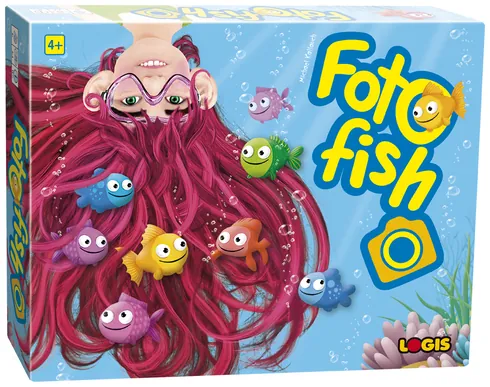
Each child has a cardboard fish aquarium, a camera and the head and tail of a puzzle fish. Two dice determine which fish have to be in the photo: two fish, sometimes only one or none at all. Everyone slides the camera over the grid at the same time until exactly those fish are in the picture. Whoever is finished calls “Click”; the search continues until everyone has a correct photo. The fastest child receives a large fish piece, the others a small one. If a puzzle fish no longer fits into the aquarium, the game ends; the longest fish wins.
What it can help develop
At its core the game is about visual search: children have to find the fish shown on the dice without being distracted by the others; this calls for selective attention. Everyone searches at the same time and the fastest receives more: speed counts too. There is also a small spatial task: where must the camera sit so that only the fish being looked for are in the picture? Nobody goes away empty-handed; frustration stays low.
Especially suitable for
- Children from age 4 who enjoy seek-and-find pictures
- Mixed-age groups thanks to variants
- Children who are quickly frustrated
Less suitable for
- Older school-age children who want tactics
- Children with colour vision deficiency: fish colours matter
Our verdict
Foto Fish is a worthwhile choice for families with children from age 4 who enjoy searching and differ in speed. Everyone searches at the same time, even the slowest child gets a small reward, and cameras in two sizes help to even out the race. Its limitations are children with colour vision deficiency, because the fish colours matter, and slightly older school-age children who want tactics.
Getting started
- Lay the camera straight on the grid: the photo counts only if no fish other than the rolled ones are in the picture.
- Look for the orange fish from the die as a yellow fish in the aquarium, because it appears only in yellow there.
In detail
Variants and player count
The Spiel des Jahres jury mentions variants that allow younger children to compete against older ones. The components are designed for this: each aquarium is double-sided, the colour of the side shows the difficulty level, and the cameras come in two sizes. According to the review by Wieland Herold, this makes it possible to slow down fast children, as our tip for parents also suggests. According to Wikipedia, the game ends not only when a puzzle fish no longer fits into the aquarium but also when no large fish pieces are left. For the playing time, the jury gives 15 to 20 minutes, Luding 15 and Wieland Herold around 15 minutes, in line with our figure of about 15 minutes.
What reviewers say
The Spiel des Jahres jury, which nominated Foto Fish for the Kinderspiel des Jahres in 2020, rates the level of challenge as low. The jury describes highly concentrated searching with a low level of frustration. In 2021, the game was named “Årets barnspel”, the children’s game of the year in Sweden, presented by Sveriges Leksakshandlares Riksförbund. In his review of May 2020, Wieland Herold highlights the solid cardboard components. He notes that slower children also get a fish piece, just a narrower one.
How it compares
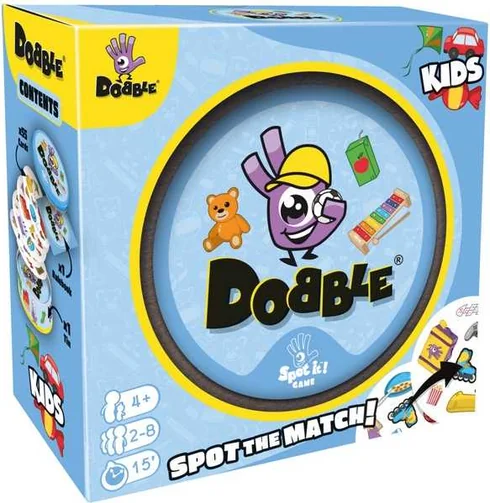
Lucky Sock Dip (from age 4, 2 to 6 people, about 10 minutes) calls for visual search and processing speed, like Foto Fish, plus impulse control. Lucky Sock Dip suits children who like searching and comparing, and groups of children of up to six, but is less suited to children who find frequent losing hard to cope with. Dobble Kids (from age 4, 2 to 5 people, about 10 minutes) shares the age and the skill area of perception and speed with Foto Fish. Perception and speed is the only skill area listed for each of the two games. Foto Fish particularly suits mixed-age groups and children who get frustrated quickly.
Sources
Frequently asked questions
What age is Foto Fish suitable for?
Foto Fish is recommended from age 4. A child who enjoys looking at seek-and-find pictures and stays focused while doing so is ready; frustration is rare because slower children win something too. It is less suited to older school-age children who want tactics and to children with colour vision deficiency.
How long does a game take and how many people can play?
A game takes about 15 minutes, and the game is for 2 to 4 people. Everyone searches at the same time; whoever has a correct photo first gets the large fish piece, the others a small one. In the end, the longest fish wins.
What skills can Foto Fish help develop?
It can help develop perception and speed. Children look for the fish shown on the dice without being thrown off by the other fish, and work out where the camera has to lie so that only those are in the picture.
What if a child gets frustrated quickly?
The jury of the Spiel des Jahres describes the frustration level as low: the fastest child receives the large fish piece and all the others a small one. This way nobody goes away empty-handed.