How it plays
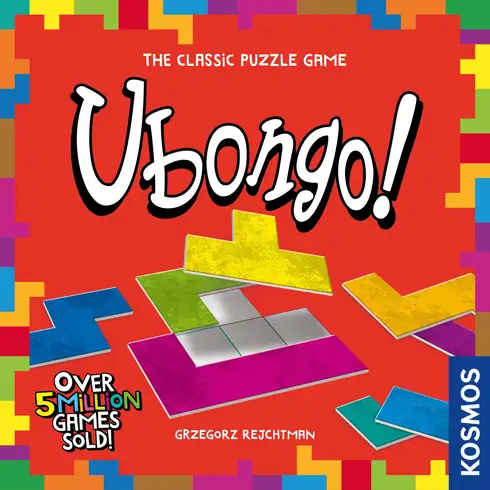
Each player has twelve puzzle pieces and receives a new puzzle board every round. The die determines the challenge, which shows which three pieces (four on the harder side) have to cover the light area without gaps. Everyone works on their puzzle at the same time against the sand timer. Whoever calls “Ubongo!” first receives a blue gem, the second player an amber one; everyone who finishes in time also draws a gem from the bag. After nine rounds, the most valuable collection wins.
What it can help develop
Above all, Ubongo calls for visual-spatial reasoning under time pressure: children imagine how a piece, rotated or flipped, fits into a corner (mental rotation) and mentally break the area down into sections. Even picking out the right pieces requires looking closely. If things get stuck, the chosen arrangement has to be abandoned and another way found, which calls for cognitive flexibility. The sand timer also pushes processing speed.
Especially suitable for
- Children from age 8 who enjoy brain-teasers
- Mixed groups: two difficulty levels even things out
- Short games or solo practice against the clock
Less suitable for
- Children who quickly freeze under time pressure
- Children under 8: a junior edition is a better choice
Our verdict
Ubongo is a worthwhile choice for children from age 8 who enjoy puzzles and for mixed family groups, because the rules are short and two difficulty levels balance out children and adults. In Sweden, it was voted family game of the year in 2003 under its original title, “Pyramidens Portar”, and in the Deutscher Spiele Preis 2005, it came fourth. Its limitation is the time pressure: anyone who recognises shapes more slowly rarely wins.
Getting started
- Before starting, emphasise that the pieces may be rotated and flipped.
- Mention that everyone who finishes in time draws a gem from the bag, so slower children do not come away empty-handed.
- The solo variant against the clock is also good for practice.
In detail
Variants and player count
According to the publisher, the edition “Ubongo Classic – Das wilde Puzzlespiel” from KOSMOS (2022) is intended for 1 to 4 people from age 8; the designer is Grzegorz Rejchtman. It contains 54 puzzle boards, four sets of twelve puzzle pieces, a die, a sand timer, a cloth bag, 58 gems and a round track. The older KOSMOS rules from 2015 describe a tie-break without the sand timer and a solo variant against the clock. A special edition “Schule der magischen Tiere” from 2024 rewards players differently and does without the bag. The game was published in 2003 by Kärnan as “Pyramidens Portar” and in 2005 by Kosmos as Ubongo.
What reviewers say
In Reich der Spiele (2005), Michael Weber calls Ubongo easy to learn, quick to play and challenging for all groups of players. According to the review, experienced and occasional players alike have fun, but puzzling against the clock is not for everyone. Brettspiele-Report sees a clear difference between the two difficulty levels with three and four pieces and finds that the game trains the geometric eye without players noticing. Hall9000 advises leaving out the sand timer with children; according to the review, the sides with three and four pieces can be mixed. On Hall9000, the fact that whoever sees the solutions faster usually wins is criticised, as is the frustration in groups of unequal ability. Spielbar highlights the very short rules and recommends the variant without the sand timer, especially with younger children.
How it compares
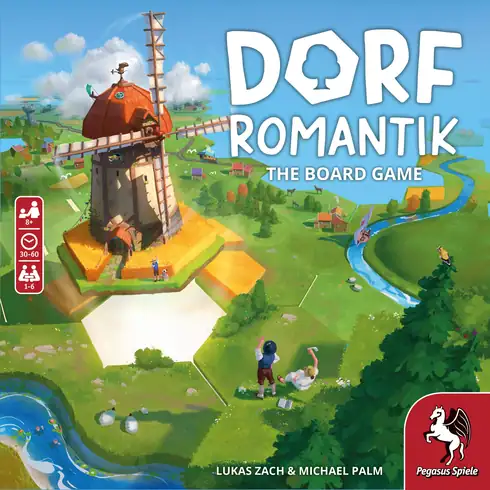
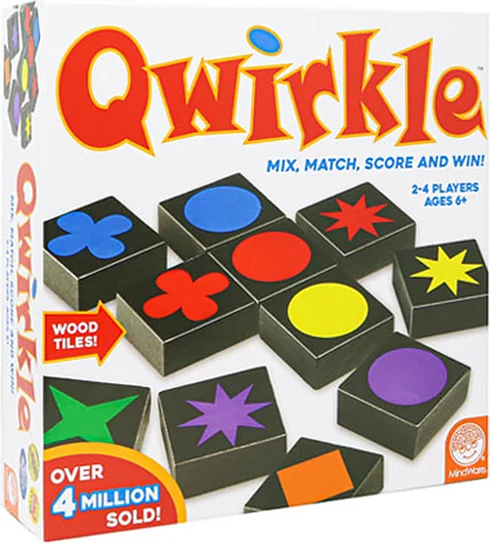
Qwirkle (from age 8, 2 to 4 people, 30 to 45 minutes) shares both skill areas with Ubongo, logic and planning as well as perception and speed, and also calls for pattern recognition and planning ahead. Qwirkle is a calm tile-laying game without text, in which luck evens out experience a little. Dorfromantik: The Board Game (from age 8, 1 to 6 people, about 30 to 60 minutes), like Ubongo, calls for spatial reasoning, but is played calmly and cooperatively. Dorfromantik: The Board Game is less suited to children looking for speed, action or competition. Ubongo, by contrast, relies on processing speed and suits mixed groups in which two difficulty levels even things out; children who quickly freeze under time pressure are less well served by Ubongo.
Sources
- KOSMOS: Ubongo Classic (publisher’s page, in German)
- KOSMOS: Ubongo rules, 2015 (PDF, in German)
- KOSMOS: rules of the 2024 special edition (PDF, in German)
- Wikipedia (German): Ubongo
- Reich der Spiele: review by Michael Weber (in German)
- Hall9000: review and readers’ comments (in German)
- spielbar.com: review (in German)
- Brettspiele-Report: review (in German)
Frequently asked questions
What age is Ubongo suitable for?
The recommended minimum age is 8. Children who enjoy brain-teasers and can turn and flip pieces in their minds are ready. Anyone who quickly freezes under time pressure is better off starting without the sand timer; for younger children, there is a junior edition.
How long does a game take and how many people can play?
A game takes about 25 minutes and consists of nine rounds. The game is for 1 to 4 people: they play simultaneously against each other for the most valuable gem collection, or alone against the clock in a solo variant.
What skills can Ubongo help develop?
It can help develop logic and planning as well as perception and speed. Players imagine how a piece fits into the area once it has been rotated or flipped, and if an arrangement does not work out, a new approach is needed.
Can children and adults play together?
Yes. The puzzle boards have two difficulty levels with three or four pieces, which can be mixed. In groups of unequal ability, frustration can still arise, because the quickest eyes are often ahead.