How it plays
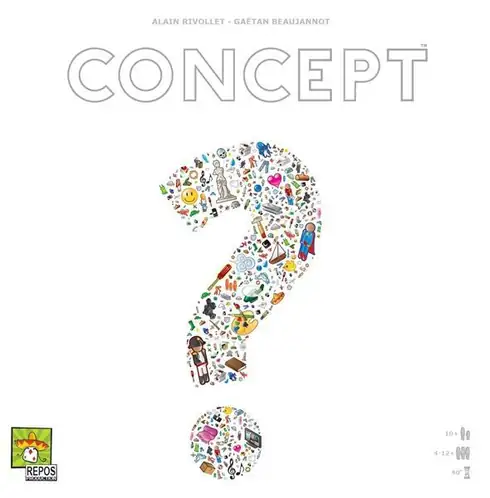
Two people form a team, draw a card and secretly choose a word from three difficulty levels. Without speaking, they explain it by placing pieces on the more than a hundred pictograms on the board. First comes the green question mark for the type of word (a “bee” is an animal), then cubes for features such as “flies” or “yellow”. The others guess; the team may only say “yes”. Whoever is right first gets two points, and each of the explainers gets one. After twelve cards, whoever has the most points wins.
What it can help develop
The explaining team breaks the word down into features and considers which pictogram, in which order, will put the guessers on the right track: this calls for perspective-taking and planning. Because a pictogram means different things depending on the word, cognitive flexibility is needed; if the others make no progress, the team starts afresh instead of clinging to its first idea. Those guessing hold several clues in working memory and search for the right word.
Especially suitable for
- Children from age 10 who enjoy lateral thinking
- Mixed groups of four or more, grandparents included
- Families who enjoy guessing games without time pressure
Less suitable for
- Children who think very literally: the symbols feel awkward
- Groups of three: it needs at least four people
Our verdict
Concept is a worthwhile choice for groups of four or more spanning several generations, in which children from age 10 and adults enjoy unusual lines of thought and puzzling things out without time pressure. Its strength: everyone is constantly involved, and in 2014 it won the French As d’Or. Its limitations are a certain amount of time to get going and words that can hardly be expressed with symbols.
Getting started
- Always set the type of word with the green question mark first, for example “animal”, and only then add features with the cubes.
- If a clue leads people astray, take the pieces away again and start afresh rather than defending your first idea.
In detail
Variants and player count
According to the official Asmodee rules (German edition), two people form a team and draw a card with three difficulty levels; the blue one is easy and ideal for the first game. Words, titles of works or sayings are explained with pieces on the pictograms of the board; the only answer given is “yes”. According to the rules, players can also play without points if they wish; a timer is not included. Concept was designed by Alain Rivollet and Gaëtan Beaujannot, published by Repos Production and is intended for 4 to 12 people.
What reviewers say
The Spiel des Jahres jury, which nominated Concept in 2014, praises unusual lines of thought and engaging with the other players’ leaps of thought. According to Wikipedia, it won the As d’Or – Jeu de l’Année in 2014. Reich der Spiele calls it a very communicative game that does not immediately flow easily; according to Reich der Spiele, the group soon gave up awarding points. Board Game Quest highlights that nobody has to wait and everyone is constantly involved, but considers the points system unnecessary. According to Board Game Quest, suitable icons are missing for difficult terms, players get stuck, and analytical, literal thinkers may be frustrated.
How it compares
Codenames (from age 10, 4 to 8 people, about 15 minutes) has the same three skill areas as Concept: flexibility, language and cooperation. Both call for vocabulary and association, cognitive flexibility and perspective-taking. In Codenames, the spymasters give a word and a number; in Concept, a team of two explains without words, using pieces. Codenames is less suited to groups with very different vocabularies. Just One (from age 8, 3 to 7 people, about 20 minutes) also covers language, cooperation and flexibility; everyone plays in one team, and the clues are written down secretly. Just One is less suited to children who still find reading and writing difficult. Concept suits children from age 10 who enjoy lateral thinking and mixed groups of four or more; for very literal-minded children, the symbols feel awkward.
Sources
Frequently asked questions
What age is Concept suitable for?
Concept is recommended from age 10. A child is ready when they enjoy thinking in roundabout ways and can understand the same symbol in different contexts. Children who think strictly literally often struggle with the symbols.
How long does a game take and how many people can play?
A game takes about 40 minutes. The game is for 4 to 12 people: two explain as a team, while the others compete to guess first. The game ends after twelve cards; it cannot be played with three.
What skills can Concept help develop?
It can help develop flexibility, language and cooperation. The team breaks down a word such as “bee” into features, for example animal, flies, yellow, and considers which symbol is most likely to help the guessers. If they make no progress, the team starts again.
How do you explain without words?
With pieces that are placed on pictograms on the board. The green question mark first marks the type of word, then cubes describe properties, such as whether something flies or what colour it is. Guesses may only be answered with “yes”.