How it plays
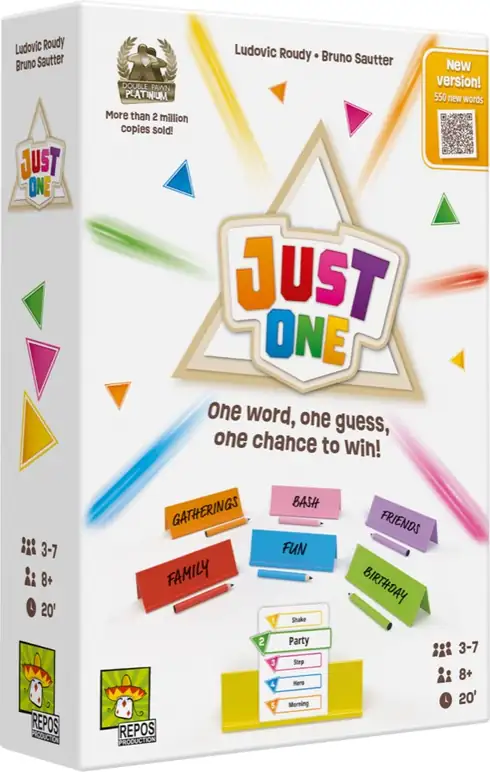
Players take turns to be the guesser: they draw a card with five words, place it on their stand without looking at it and say a number from 1 to 5. All the others secretly write down a clue word. While the guesser closes their eyes, duplicate clues, including those from the same word family, are crossed out. Then the guesser makes one guess or passes; a wrong guess costs an extra card. With three players, and in the new edition also with four, each person gives two clues. The score is the number of correct guesses out of 13 cards.
What it can help develop
When giving a clue, word retrieval comes first: what goes with “zebra”? Then inhibition is needed: others probably had the same first idea, “stripes”, so it would be crossed out. Players check their own association from the others’ point of view and look for a second one that fits just as well: perspective-taking and cognitive flexibility. The word family rule also calls for language awareness along the way. The guesser condenses loose clues into a single word and weighs up whether a guess is worth it.
Especially suitable for
- Children from age 8 who love words, and grandparents
- Mixed groups of five or more people
- Children who dislike losing: everyone is on one team
Less suitable for
- Two-person households: it needs at least three players
- Children who still find reading and writing difficult
Our verdict
Just One is a worthwhile choice for children from age 8 who love words, for grandparents and for mixed groups, ideally of five or more people. Everyone plays on one team, so children who dislike losing can join in too. The winner of the Spiel des Jahres 2019 won over the jury with its simplicity and low barrier to entry. Its limitations are the reading and writing required, the minimum of three people and the pressure when guessing.
Getting started
- Demonstrate the crossing-out rule first: identical clues are crossed out, including those from the same word family, while the guesser closes their eyes.
- Say beforehand that the guesser makes one guess or passes. Passing is allowed; only a wrong guess costs an extra card.
- With three players, and in the new edition also with four, play the variant in which each person gives two clues. That way, enough clues remain after crossing out.
In detail
Variants and player count
According to the publisher, the 2025 new edition brings 550 new words. According to the publisher’s website, the Italian rules still correspond to the 2018 first edition, in which the variant with two clues per person applies only with three players. Reviewing the first edition, mit80.de observed that with four players often only one clue remained after crossing out, and considered larger groups better. Gamesweplay considers five or six people ideal.
What reviewers say
In the vote for the Spiel des Jahres 2019, Just One prevailed over its fellow nominees “Lama” and “Werwörter”. Besides its simplicity, the jury highlights the pull the game develops. Rezensionen für Millionen calls revealing the clues a moment of suspense and fun. Gamesweplay praises a very simple game that is a lot of fun. Reviewing the first edition, Spielfreude notes that in regular groups, words and ideas start to repeat after about nine games.
How it compares
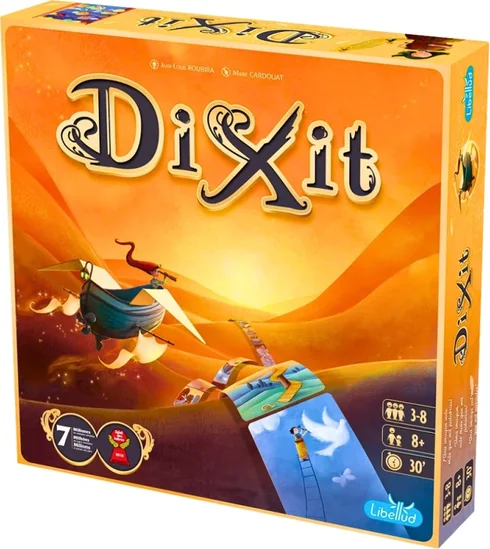
Codenames (from age 10, 4 to 8 people, about 15 minutes) calls on the same areas as Just One: vocabulary and word association, flexibility and perspective-taking. Codenames is aimed more at teenagers and adults who love words and enjoy discussing things in their team, and is less suited to groups with very different vocabularies. Dixit (from age 8, 3 to 8 people, about 30 minutes) shares language and cooperation with Just One and also relies on imagination. Dixit suits children who like telling stories and groups spanning several generations in which adults have hardly any advantage. Just One is the more likely choice when children dislike losing, because everyone plays on one team.
Sources
- Repos Production: Just One (publisher’s page)
- Just One rules, new edition (PDF, in German)
- Just One rules, first edition (PDF, in Italian)
- mit80.de: review (in German)
- Gamesweplay: review (in German)
- Wikipedia (German): Just One
- Spiel des Jahres: Just One (jury, in German)
- Rezensionen für Millionen: review (in German)
- Spielfreude: review (in German)
Frequently asked questions
What age is Just One suitable for?
Just One is recommended from age 8. A child is ready when they can read, write down a clue word and enjoy words. Anyone who still struggles with reading and writing will get less out of it.
How long does a game take and how many people can play?
A game takes about 20 minutes. The game is for 3 to 7 people, who play together, and the score is the number of correct guesses out of 13 cards. The game cannot be played with two; several reviews of the first edition see its full appeal only with five or more people.
What skills can Just One help develop?
It can help develop language, cooperation and flexibility. For “zebra”, many people think of “stripes” first; this clue would be crossed out. Anyone looking for a second idea that fits just as well puts themselves in the others’ shoes, and everyone pursues a common goal.
What if guessing feels uncomfortable?
Some people feel under pressure when guessing, and many pass. That is allowed; however, a wrong guess costs an extra card. Because everyone plays on one team, nobody plays against the others.