How it plays
Over seven rounds, representing one week, each side places three action markers (wooden figures) on characters from the Holmes stories. Dr Watson, Mrs Hudson and Inspector Lestrade are always available; two more join on the first day, then one more each day. They provide magnifying glasses as influence, or clue cards, usually in exchange for magnifying glasses. Each type of clue is scored separately: whoever has more cards scores their value minus the opponent’s cards. Whoever has the most points wins. In the KOSMOS edition, Sherlock faces Moriarty; in the Devir original, he faces his brother Mycroft.
What it can help develop
Above all, planning ahead is required. The markers stay where they are, and from the second day onwards each turn must move one of them to a different character without one of your own markers. Anyone who does not think ahead finds the character they want occupied by one of their own markers. Anyone who sees that the opponent lacks the magnifying glasses for a character can use that character’s benefit alone, which requires taking the other player’s perspective. Then there is weighing things up: which majority is worth the effort, and is it worth risking face-down cards?
Especially suitable for
- Parent-and-child duels from age 10
- Children who enjoy collecting and playing tactically
- Short two-player games in the evening
Less suitable for
- Anyone expecting real detective work and puzzles
- Tactics fans who find there is too much luck
Our verdict
Holmes: Sherlock & Mycroft is a worthwhile choice for duels between parents and children from age 10 and for players who enjoy collecting and like to plan their moves. Pedro Soto’s illustrations and the atmosphere are praised, and because majorities often tip late, it stays exciting to the end. Its limitation lies in the theme: players collect rather than solve a case, and luck plays a noticeable part.
Getting started
- First take your time explaining the moving rule: from the second day onwards, a marker already on the board must move to a character without one of your own markers. Characters with markers from both sides are blocked the following day.
- Show the scoring with an example: each type of clue counts separately, and whoever has more cards scores their value minus the opponent’s cards.
- Keep an eye on your opponent: if they lack magnifying glasses for a character, you can use that character’s benefit alone. Planning the order for the next round in advance is also worthwhile.
In detail
Variants and player count
According to Wikipedia, the Spanish original by Diego Ibáñez, with artwork by Pedro Soto, was published by Devir in 2015 (according to Spieletest.at, in 2016). The German edition, “Holmes: Sherlock gegen Moriarty”, followed from KOSMOS in 2017. According to Wikipedia, a game lasts 7 rounds (days), each person has three action markers, and Dr Watson, Mrs Hudson and Inspector Lestrade are always available. According to Wikipedia, the components include magnifying glasses as influence markers, clue cards and character cards; Hall9000 mentions small wooden figures. According to Wikipedia, the variants in the KOSMOS edition are Mycroft cards and reserving.
What reviewers say
According to the list of the International Gamers Award 2017, the Devir edition, Holmes: Sherlock & Mycroft, was among the nominees in the General Strategy category for two players. Reich der Spiele, Fjelfras and Spieletest.at praise the illustrations; Reich der Spiele calls the atmosphere successful, Spieletest.at the components high-quality. Reich der Spiele says it is not a deduction game, Fjelfras criticises a colour-collecting game instead of deduction, and Spieletest.at says players collect instead of solving a case. Fjelfras sees the markers that stay in place and have to be moved as a task of planning the order; Pöppelkiste highlights planning ahead for the next round. Brettspielblog.ch describes how majorities often tip late and games are usually decided shortly before the end. Reich der Spiele criticises the relatively high luck factor, which bothers strategists, and Hall9000 criticises little variety, dutiful collecting and a weak link to the theme.
How it compares
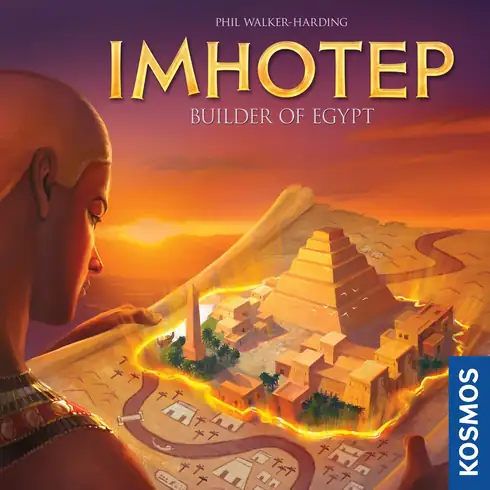
Kahuna (from age 10, 2 people, about 30 to 40 minutes) is, like Holmes: Sherlock & Mycroft, a game for two and also calls for planning ahead; Kahuna also has the skill area of flexibility. Imhotep (from age 10, 2 to 4 people, about 40 minutes) also calls for planning ahead and perspective-taking, but additionally has the skill area of flexibility. Holmes: Sherlock & Mycroft suits parent-and-child duels from age 10 and children who enjoy collecting and playing tactically. Holmes: Sherlock & Mycroft is less suitable for anyone expecting real detective work and puzzles, and for tactics fans who find there is too much luck.
Sources
- Wikipedia (German): Holmes: Sherlock & Mycroft
- BoardGameGeek: Holmes: Sherlock & Mycroft
- International Gamers Awards: nominees 2017
- fjelfras: Kritisch gespielt, Holmes: Sherlock gegen Moriarty (in German)
- Reich der Spiele: review (in German)
- Brettspielblog.ch: review (in German)
- spieletest.at: review (in German)
- Pöppelkiste: review (in German)
- Hall9000: review (in German)
Frequently asked questions
What age is Holmes: Sherlock & Mycroft suitable for?
Holmes: Sherlock & Mycroft is recommended from age 10. A child is ready when they enjoy collecting and plan their moves ahead. They should know that this game is about counting clues; anyone expecting real detective work will be disappointed.
How long does a game take and how many people can play?
A game takes about 30 minutes. Holmes: Sherlock & Mycroft is strictly a game for 2 people, who play against each other. It is played over seven rounds, representing one week; whoever has the most points at the end wins.
What skills can Holmes: Sherlock & Mycroft help develop?
The focus is on logic and planning. From the second day onwards, a marker has to move on every turn to a different character without one of your own markers. Anyone who does not think ahead blocks the character they want with their own marker. Taking the other player’s perspective and weighing things up come in too.
Do players solve a crime in Holmes: Sherlock & Mycroft?
No. Players collect clue cards, which are scored by type of clue. Reviews speak of collecting rather than deduction, but praise the atmosphere and the design.