How it plays
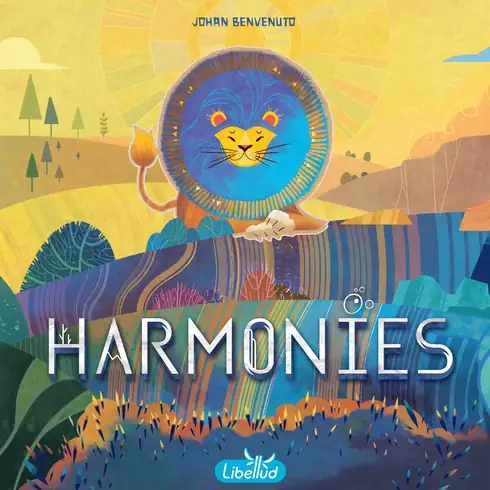
On each player’s own board, a landscape grows from coloured wooden pieces: blue makes water, grey stacks up into mountains, brown and green into trees, yellow forms fields and red buildings. Taking turns, players take one of five sets of three from the middle and place all three pieces. They may also take an animal card, with no more than four at a time. If the landscape shows the pattern on a card, an animal cube goes on the matching piece. Whoever scores the most points with their landscape and animals wins.
What it can help develop
Harmonies calls above all for planning ahead: every piece should earn landscape points and at the same time leave room for future animals. Keeping track of several animal patterns puts a load on working memory. Patterns may be formed in any orientation, but the heights of trees and mountains have to be exactly right: this calls for spatial reasoning. If someone snaps up the set a player was hoping for, or the refill brings different pieces, it is time to re-plan, which calls for cognitive flexibility.
Especially suitable for
- Children from age 10 who enjoy puzzling and optimising
- Quiet family evenings without direct attacks
- Children who also like to puzzle on their own (solo mode)
Less suitable for
- Groups looking for a lot of direct interaction
- Families who already own Azul or Cascadia
Our verdict
Harmonies is a worthwhile choice for quiet family evenings and for children from age 10 who enjoy optimising landscapes and animal patterns. One review calls it easy to get into, the wooden components and illustrations are appealing, and it can also be played solo. Its limitations are the low level of interaction, because each player works on their own landscape, the element of chance in the pieces and animal cards, and the similarity to Azul and Cascadia.
Getting started
- Remember that no more than four animal cards may be laid out at the same time.
- Keep an eye on the end of the game: it approaches when the bag is empty or no more than two spaces are free.
In detail
Variants and player count
The rules list pieces in six colours, while the publisher Libellud lists 120 coloured wooden pieces. Harmonies is designed for 1 to 4 people; the rules include a solo mode. For the first few games, the rules recommend side A and animal cards with edge stripes in different colours; nature spirit cards are only added after a few games. The designer is Johan Benvenuto, and the illustrations are by Maëva Da Silva.
What reviewers say
In 2024, Harmonies was on the Spiel des Jahres recommendation list. In the Swiss Gamers Award 2024, which is voted on by games clubs, toy libraries and gaming associations, it finished ahead of Castle Combo and Bomb Busters. Jury member Karsten Grosser praises the elegant interlocking of landscape scoring and animal scoring, the wooden pieces, the indirect interaction via the shared display and the focus on each player’s own board. Reich der Spiele praises the components but notes little interaction, with everyone puzzling away on their own. The review considers the game not innovative, sees a similarity to Cascadia and Azul and calls it a feel-good game. Vindjeu praises the wooden tokens and illustrations and calls it easy to get into, but sees hardly any interaction, chance in the pieces and animal cards, and a mechanical similarity to Azul and Cascadia.
How it compares
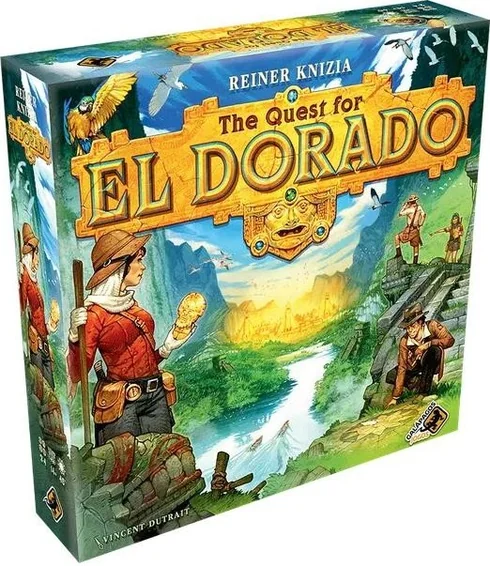
Azul (from age 8, 2 to 4 people, about 30 to 45 minutes) shares the skill area of logic and planning with Harmonies, calls for spatial reasoning like Harmonies and has language-free components. The Quest for El Dorado (from age 10, 2 to 4 people, about 45 to 60 minutes) calls for planning ahead and cognitive flexibility, like Harmonies. In The Quest for El Dorado, other players’ pieces block spaces, and impatient children find the start slow going. Harmonies is the only one of the three games that can also be played solo, and suits puzzle-loving children from age 10 and quiet family evenings without direct attacks. It is less suited to groups looking for a lot of direct interaction and to families who already own Azul or Cascadia.
Sources
- Libellud: Harmonies rules (PDF, in German)
- Libellud: Harmonies (publisher’s page)
- Wikipedia (German): Spiel des Jahres – Empfehlungsliste
- Spiel des Jahres: Harmonies (recommendation list, in German)
- Swiss Gamers Award: results 2024
- Le Matin: report on the Swiss Gamers Award (in French)
- Reich der Spiele: review (in German)
- Vindjeu: review (in French)
Frequently asked questions
What age is Harmonies suitable for?
Harmonies is recommended from age 10, and the Spiel des Jahres jury rates its demands as medium. A child who enjoys planning and optimising and is also happy to work quietly on their own is ready. Anyone looking for a lot of direct interaction will enjoy it less.
How long does a game take and how many people can play?
A game takes about 30 minutes. The game is for 1 to 4 people; there is a solo mode for playing alone. With several players, everyone competes without direct attacks: whoever scores the most points with their landscape and animals wins.
What skills can Harmonies help develop?
It can help develop logic and planning. With every piece, players have to weigh up whether it earns points for the landscape or leaves room for a later animal. Animal patterns work in any rotation, but the heights have to be exactly right. If a set someone was hoping for is snapped up, they have to plan again.
Is there much interaction?
No, each player works on their own landscape; the only indirect interaction comes from the shared display, from which someone can take the set another player was hoping for. Reviews criticise this but praise it as a calm, feel-good game.