How it plays
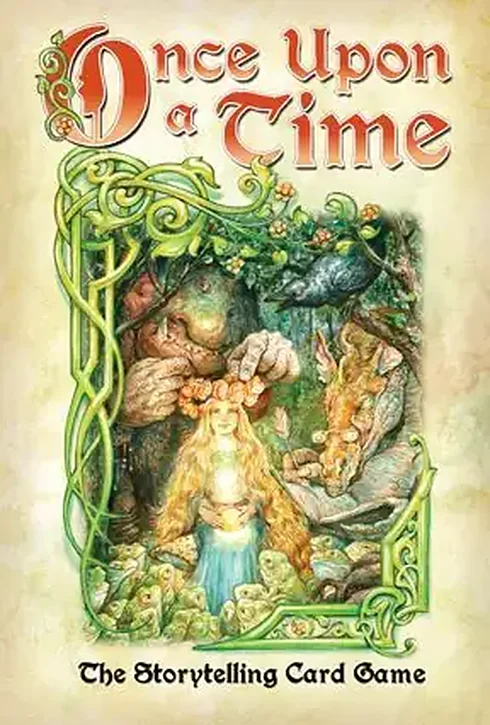
Everyone receives a secret ending card and, depending on the number of players, five to nine story cards: characters, things, places, aspects and events, such as a queen, a sword or a forest. The storyteller spins a fairy tale and lays a card face up as soon as the word on it becomes important to the plot. If a word comes up that someone else holds in their hand, that person may take over; the same applies with a matching interrupt story card. The winner is whoever has played all their story cards and brings the story to a fitting close with their own ending card.
What it can help develop
The words are given, but players spin the thread of the story themselves, and every word has to matter to the plot: a mere mention does not count. Because the ending card has to fit logically, players plan ahead. Listeners pay attention to their own keywords; whoever interrupts picks up seamlessly from someone else’s ideas and changes their plan: cognitive flexibility in real time. Because contradictions may be challenged, working memory keeps track of the plot.
Especially suitable for
- Fairy-tale fans from age 8 who love telling stories
- Mixed groups of children and adults
- Children who want to practise speaking freely
Less suitable for
- Shy children who do not like speaking in front of others
- Groups who value clear-cut rules without discussions
Our verdict
Once Upon a Time: The Storytelling Card Game is a worthwhile choice for families and mixed groups who enjoy telling stories. One review praises the strong interaction and the rulebook with its many examples. However, it also mentions the need for practice in the first few games, a strong dependence on the group and rule interpretations that lead to lengthy discussions.
Getting started
- To get started, use the many examples in the rulebook.
- Choose smaller groups at first, because in large groups there is a risk that the story gets lost in discussion.
In detail
Variants and player count
According to BoardGameGeek, the game was first published in 1993 as “Once Upon a Time” by Lambert, Rilstone and Wallis; the German third edition was published by Pegasus in 2013. According to Reich der Spiele, the 2013 Pegasus edition has 114 story cards, including interrupt cards, in five categories, and 51 ending cards. According to the rules of the English third edition from Atlas Games, each person receives one ending card and as many story cards as 11 minus the number of players (at least 5). According to these rules, a player may interrupt if they hold a matching element or an interrupt story card of the same category. Challenges are allowed, among other things, when the storyteller falters, contradicts the story or digresses. The rules advise against being strict when checking the ending card with younger or inexperienced players and against using challenges against younger or less articulate players; a gentle hint is usually enough.
What reviewers say
The review on Reich der Spiele of the Pegasus edition praises the rulebook with its many examples, the atmospheric illustrations by Omar Rayyan and the interaction on which the game thrives. The review has reservations: a few practice games are needed and the game depends heavily on the group. Interpreting the rules leads to lengthy discussions, and in large groups there is a risk that the story gets lost in discussion. According to Atlas Games, the English third edition received a nomination for the Origins Award (Children’s, Family, or Party Game) in 2013 and the Parents’ Choice Recommended award.
How it compares
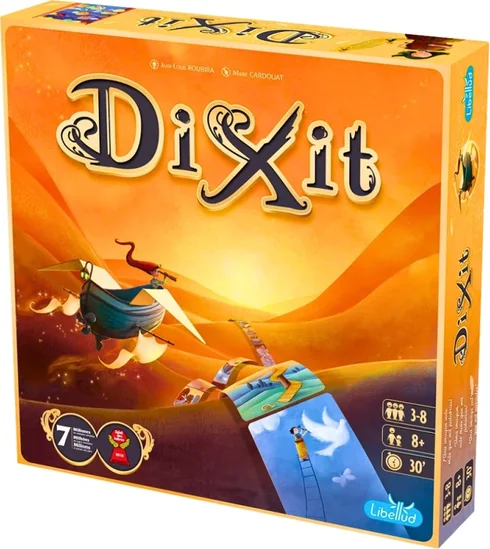
Dixit (from age 8, 3 to 8 people, about 30 minutes) and Once Upon a Time: The Storytelling Card Game share the age, the playing time and the skill area of language. Dixit calls for perspective-taking, vocabulary and word association as well as imagination. Speedy Words (from age 8, 2 to 6 people, about 10 minutes) and Once Upon a Time: The Storytelling Card Game share the age, the number of players and the skill area of language. Speedy Words, however, calls for word retrieval, processing speed and impulse control. It is less suited to groups with big differences in speed. Once Upon a Time: The Storytelling Card Game suits fairy-tale fans from age 8 who love telling stories, and mixed groups of children and adults. It is less suited to shy children who do not like speaking in front of others.
Sources
Frequently asked questions
What age is Once Upon a Time: The Storytelling Card Game suitable for?
Once Upon a Time: The Storytelling Card Game is recommended from age 8. A child who likes making up stories and is happy to speak freely in front of others is ready. Anyone who dislikes speaking in front of others or prefers games with crystal-clear rules will enjoy it less.
How long does a game take and how many people can play?
A game takes about 30 minutes. The game is for 2 to 6 people. Everyone competes to be the first to get rid of their story cards and to finish with their secret ending card. Groups in which children and adults sit at the table together work well.
What skills can Once Upon a Time: The Storytelling Card Game help develop?
It can help develop language, logic and planning as well as flexibility. The words are given, players invent the plot themselves, and the ending card has to fit convincingly at the end; whoever interrupts has to pick up seamlessly from someone else’s story.
Do you need to practise the game first?
One review considers a few practice games necessary until the interplay of storytelling, interrupting and challenging comes naturally. The rulebook, with its many examples, is praised.