How it plays
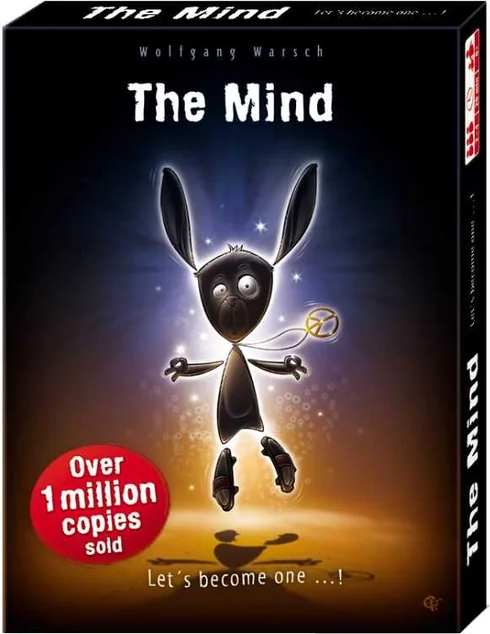
The game is played as a team with 100 number cards. In level 1, each person receives one card, in level 2 two, and so on. With no turn order, words or signals, all the cards in hand have to go onto one pile in ascending order: whoever thinks they hold the lowest card plays it. If someone still has a lower card in hand, the team loses a life. If everyone agrees, a throwing star lets all players discard their lowest card. The aim: complete all the levels (twelve with two players, eight with four).
What it can help develop
Above all, the game calls for impulse control: whoever holds the 61 after the 40 has to bear the tension and wait. A feel for the right moment comes in too: according to the rules, the team brings its sense of time into sync, and nobody counts. Sustained attention and a feel for numbers up to 100 are also needed. And players put themselves in the others’ shoes: a long silence can mean that nobody holds a card in between.
Especially suitable for
- School-age children from age 8 who are confident with numbers up to 100
- Families who would rather play together than against each other
- Occasional players who like short rules
Less suitable for
- Restless groups: the game requires concentration
- Tacticians who want to plan and stay in control
Our verdict
The Mind is a worthwhile choice for families with school-age children from age 8 who want to win or lose together as a team. The game was nominated for the Spiel des Jahres in 2018 and won the As d’Or in 2019; it thrives on the tension in the silence. Its limitations are that it divides opinion, needs a calm group and offers hardly any strategy.
Getting started
- Note that levels and lives depend on the number of players: with two, there are twelve levels to complete, with three ten and with four eight, and there are as many lives as players.
- Explain the throwing star beforehand: it is proposed by raising a hand, and if everyone agrees, each person discards their lowest card.
- Instead of counting seconds, pay attention to the others and read long pauses too, because they reveal something about the cards in people’s hands.
In detail
Variants and player count
The box contains 100 number cards as well as lives and throwing stars (in French “étoiles à lancer”, in Italian “stelle ninja”). With two players, twelve levels have to be completed, with three ten and with four eight, with 2, 3 and 4 lives respectively. To use a throwing star, a player raises their hand; if everyone agrees, each person discards their lowest card. To help concentration, the rules provide for players to place their hand flat on the table; “Stop” may be called at any time.
What reviewers say
The Spiel des Jahres jury nominated The Mind in 2018 alongside Luxor; the winner was Azul. The jury called it an astonishing experience that every player should have had at some point. At the As d’Or 2019, The Mind won the Jeu de l’Année (Grand Public) category; the award went to the French edition from Oya. Reich der Spiele praises the intoxicating tension; according to the review, the game can be explained in a few minutes and grips non-gamers and occasional players too, but can be frustrating if the team does not come together. The review on brettspiele-report.de says that whether the game is fun depends on the players and that there is no strategy to speak of. Tabletop Gaming sees hardly any strategy; according to the review, it is about reading the others and long pauses, and the game divides opinion.
How it compares
Skull King (from age 8, 2 to 8 people, about 30 to 45 minutes) shares the age and the skill area of impulse control with The Mind; Skull King also covers logic and planning, and The Mind cooperation. Ghost Blitz (from age 8, 2 to 8 people, about 20 minutes), like The Mind, calls for impulse control, plus cognitive flexibility as well as perception and speed. Ghost Blitz suits school-age children from age 8 who like reaction games, and is less suited to deliberate children who freeze under time pressure. The Mind, by contrast, suits families who would rather play together than against each other, and is less suited to tacticians who want to plan and stay in control.
Sources
- Wikipedia (German): The Mind
- NSV: rules (PDF, in French)
- NSV: rules (PDF, in Italian)
- NSV: rules (PDF, in German)
- Spiel des Jahres: The Mind (jury, in German)
- Festival des Jeux Cannes: As d’Or palmarès (in French)
- Wikipedia: As d’Or
- Reich der Spiele: review (in German)
- brettspiele-report.de: review (in German)
- Tabletop Gaming: review
Frequently asked questions
What age is The Mind suitable for?
The recommended minimum age is 8. Children who are familiar with numbers up to 100 and can bear the tension without playing a card too soon are ready. It is less suitable for restless groups and for children who like to plan and stay in control.
How long does a game take and how many people can play?
A game takes about 15 to 20 minutes. The game is for 2 to 4 people, who play together as a team; with two players, there are twelve levels to complete, with three ten and with four eight. Everyone wins or loses together.
What skills can The Mind help develop?
It can help develop impulse control and cooperation. Anyone holding a high card has to wait patiently until the moment seems right, and the team aligns its sense of time without signals or words.
Are players allowed to discuss their moves?
No. Words, signals and agreements are forbidden; whoever thinks they hold the lowest card plays it. To use the throwing star, a player raises their hand, and if everyone agrees, all players discard their lowest card.