How it plays
On 64 squares, 16 white and 16 black pieces face each other: king, queen, two rooks, two bishops, two knights and eight pawns. White moves first, and players take turns moving one piece. Each piece moves in its own way: the rook horizontally and vertically, the bishop diagonally and the knight in an L shape, the only piece that can jump over others. Moving onto the square of an opposing piece captures it. The winner is whoever checkmates the opposing king, which is then under attack with no escape.
What it can help develop
Chess has neither dice nor hidden cards: every defeat has its reason on the board. Playing through several moves mentally without touching a piece, while considering what the opponent is planning, calls for planning and working memory. The tempting capture can be a trap; anyone who first checks whether their own piece will be left unprotected afterwards is practising impulse control. With practice, children recognise patterns such as an attack on two pieces at once.
Especially suitable for
- School-age children from age 8 who enjoy brain-teasers
- Calm parent-child duels with no element of chance
- Persistent children who want to improve
Less suitable for
- Children who still find defeats hard to cope with
- Groups of more than two people
Our verdict
Chess is a worthwhile choice for school-age children who enjoy brain-teasers, like calm duels without chance and want to improve step by step. Its strength: chance plays no part, so every defeat can be explained on the board, and players practise thinking ahead. Its limitations are the long learning phase before the moves become second nature, the strict two-player format and children who still take lost games too much to heart.
Getting started
- Start with a pawns-only game: only the pawns are on the board, and whoever reaches the opponent’s back rank wins.
- When playing against a child, give a handicap, such as playing without your own queen, rather than simply letting them win.
- Introduce how the pieces move step by step; at first, checkmate seems more or less accidental to children.
In detail
Variants and player count
For its Classic Line chess set (item number 49082), Schmidt Spiele gives 2 people and 40 minutes; age and playing time differ from edition to edition. According to the chess rules on spielen.de, each side has a king, a queen, 2 rooks, 2 bishops, 2 knights and 8 pawns, and White moves first. As an introductory variant for beginners, the German Wikipedia names pawn chess: only the pawns are used, and the winner is whoever reaches the opponent’s back rank. A chess teacher (FIDE Instructor) on warumschach.de advises not always letting children win but playing with a handicap instead, for example without your own queen.
What reviewers say
The sources evaluated include no independent review of chess. According to the Steps Method (Stappenmethode), a teaching method for children’s chess, children at first hunt pieces, and checkmate seems accidental to them. According to the Steps Method, it takes months before the moves and safe play become automatic; the double attack is only taught later, and working memory is limited. The meta-analyses by Sala and Gobet (2017) on chess, music and working memory training show small to medium effects, which shrink as the quality of the study design rises. In those analyses, there was only one study on chess with an active control group; its effect was minimal (0.10 standard deviations).
How it compares
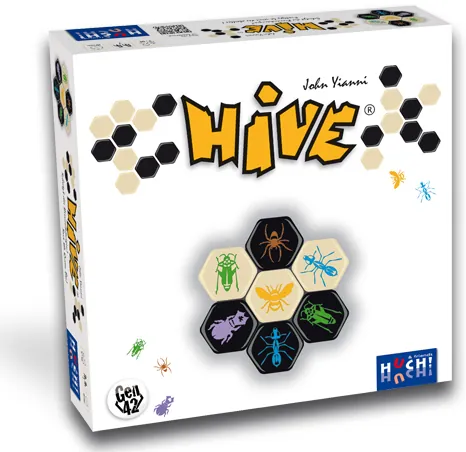
Hive (from age 9, 2 people, about 20 minutes) shares with Chess the skill area of logic and planning, the two-player format and the absence of chance. Like Chess, Hive calls for planning ahead and working memory, plus spatial reasoning. Hive is less suited to children who are looking for stories, luck or bustle. Qwirkle (from age 8, 2 to 4 people, 30 to 45 minutes) has the same age and the area of logic and planning, plus perception and speed as well as flexibility. In Qwirkle, luck evens out experience a little. Chess suits school-age children from age 8 who enjoy brain-teasers, calm parent-child duels with no element of chance and persistent children who want to improve. Chess is less suited to children who still find defeats hard to cope with and to groups of more than two people.
Sources
- spielen.de: chess rules (PDF, in German)
- Schmidt Spiele: Schach Classic Line (in German)
- PubMed: Sala and Gobet (2017), meta-analyses
- PubMed Central: Sala and Gobet (2017), full text
- Stappenmethode: teaching method for children’s chess (in German)
- Wikipedia (German): Bauernschach
- warumschach.de: Schach lernen mit Kindern (in German)
Frequently asked questions
What age is Chess suitable for?
Chess is recommended from age 8, although the ages given by different editions vary. A child who can cope with defeat and enjoys picturing several moves in their head is ready. At first, children mainly hunt pieces; it takes months before the moves are second nature.
How long does a game take and how many people can play?
There is no standard playing time; the editions give different times. Chess is a duel for 2 people without chance: whoever checkmates the opposing king wins, and a draw is possible.
What skills can Chess help develop?
Chess can help develop logic and planning. Playing through several moves mentally and taking the opponent’s plans into account also calls on working memory. Checking before a capture whether the capturing piece would then be unprotected practises impulse control.
Does chess make children smarter?
That is disputed. An analysis of many studies found small to medium effects on school performance and cognitive skills, which shrank in studies of higher quality. In the only study with an active comparison group, the effect remained minimal.