How it plays
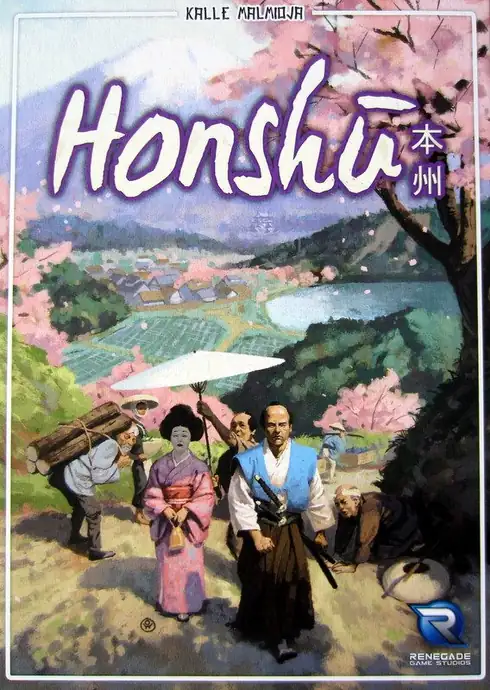
Each of the 60 cards shows landscape areas with forest, town, lake, resources and factories, as well as a number from 1 to 60. Over twelve rounds, everyone plays a card from their hand face up, optionally together with a resource that adds 60. The highest total chooses one of the played cards first. This card is placed so that it overlaps cards already in the player’s own province, either on top of them or underneath; lakes remain visible. Points come from forests, the largest town, lakes and supplied factories. With two players, modified rules apply.
What it can help develop
Honshu calls above all for spatial reasoning: where should the card go so that the town grows together, forests stay visible and no lake is covered? Planning ahead comes in when bidding: a high number secures first choice, but the player’s own card is then available to everyone, and whoever bids highest goes first in the next round. A resource used to raise the bid is missing later in the factory. Anyone who does not get the card they wanted has to change their plans.
Especially suitable for
- Children from age 8 who enjoy puzzles
- Families who want to move beyond beginner games
- Groups of three to five players
Less suitable for
- Children who prefer fast action to long deliberation
- Players who expect a lot of theme and story
Our verdict
Honshu is a worthwhile choice for families who have outgrown beginner games and for children from age 8 who enjoy puzzles. Laying out the province and bidding for turn order make the short games appealing; several nominations show the esteem in which it is held. Its limitations are the bland theme, the plain components and the fact that there is less dynamism with two players.
Getting started
- Show the bidding with an example: the number on the card is the bid, a resource adds 60, and the highest total chooses first and also starts the next round.
- Show beforehand that new cards may also be slid underneath cards already in place. That way, forests and lakes stay visible.
- Point out the resource decision to children: anyone who uses a resource for a higher bid no longer has it later for the factory.
In detail
Variants and player count
According to BoardGameGeek, Honshu was designed by Kalle Malmioja and published in 2016 for 2 to 5 people; the list of editions on BoardGameGeek names a German edition from Pegasus Spiele in 2019. The English-language rules text from Ultra Board Games describes twelve rounds; a resource adds 60 to the number on the card, and whoever has the highest total chooses first. According to a detailed forum post on BoardGameGeek, Honshu is less dynamic with two and works best with three to five; another post finds that it runs most smoothly with three or four.
What reviewers say
According to BoardGameGeek, Honshu was nominated for the Golden Geek as Best Card Game in 2016 and for the Origins Awards as Best Card Game in 2018. The reviews available are posts in the BoardGameGeek forum, not professional reviews. A detailed forum post praises the bidding with changing turn order and the placement rules; the post criticises the thin theme and the modest production. Another post calls the rules easy, the playing time short and the replay value high, and the components merely passable. A personal account in the forum calls Honshu a good next step after beginner games, but not a children’s game in the narrow sense.
How it compares
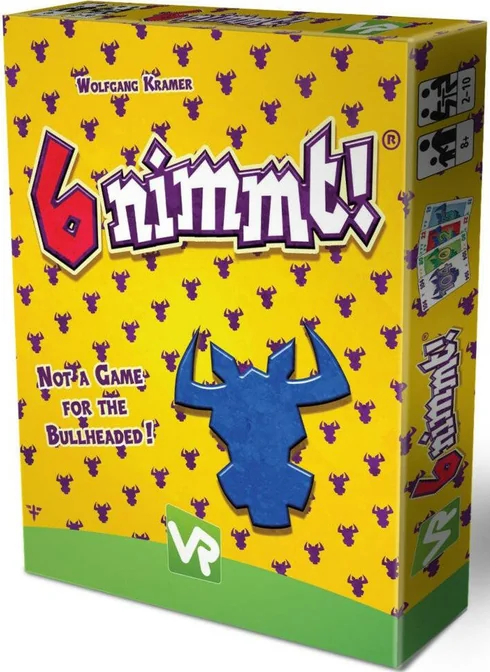
The game 6 nimmt! (from age 8, 2 to 10 people, about 45 minutes) shares the age and the skill area of logic and planning with Honshu and adds numbers and arithmetic. The game 6 nimmt! calls for weighing risks as well as number sense and comparison. Anyone who wants full control is less well served by 6 nimmt!, because luck plays a part. Azul (from age 8, 2 to 4 people, about 30 to 45 minutes) shares the age and the skill area of logic and planning with Honshu and, like Honshu, calls for planning ahead and spatial reasoning. Honshu suits children from age 8 who enjoy puzzles, families who want to move beyond beginner games and groups of three to five players. It is less suited to children who prefer fast action to long deliberation.
Sources
- BoardGameGeek: Honshu (game database)
- BoardGameGeek: Honshu, awards (game database)
- BoardGameGeek: Honshu, editions (game database)
- Ultra Board Games: Honshu, rules
- BoardGameGeek: forum, detailed post
- BoardGameGeek: forum, post on rules and components
- BoardGameGeek: forum, personal account on getting started
Frequently asked questions
What age is Honshu suitable for?
Honshu is recommended from age 8, but it is not regarded as a children’s game in the narrow sense; rather, it is the next step after beginner games. A child is ready when they enjoy puzzles and like having time to think. Anyone who prefers fast action will get impatient.
How long does a game take and how many people can play?
A game takes about 30 to 40 minutes and consists of twelve rounds. The game is for 2 to 5 people, who play against each other. With two players, modified rules apply; according to reviews, it works best with three to five.
What skills can Honshu help develop?
The focus is on logic and planning. Each card should be placed so that the town grows, the forests remain uncovered and no lake disappears. When bidding, bear in mind that a resource used for a higher bid will then be missing in the factory.
Does Honshu stay interesting in the long run?
One review rates the replay value as high, and optional end-of-game scoring cards add extra variety. There is criticism of the thin theme and the merely passable components.