How it plays
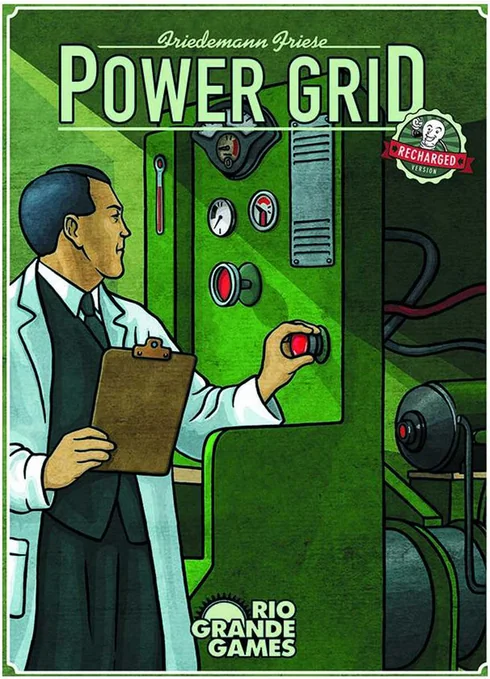
Each player runs an energy company on the Germany or USA side of the board. Every round, players bid for power plants, buy coal, oil, waste or uranium and place wooden houses in cities; connecting to a city and building lines costs money. Whoever is behind buys and builds first and gets cheaper resources. At the end of the round, the power plants run: the more cities supplied, the more money comes in. When someone has connected the set number of cities, the game ends; the winner is whoever actually supplies the most cities at that point.
What it can help develop
Power Grid Recharged calls for planning ahead on a tight budget: is the expensive power plant worth it if nothing is left for building afterwards? Whoever is in the lead bids first but buys and builds last, so whether the lead pays off has to be weighed up. Bids, resource prices and connection costs are constantly calculated in players’ heads, and working memory holds several numbers at once. Because others occupy cities or buy up resources, plans have to be adjusted: cognitive flexibility.
Especially suitable for
- Teenagers who enjoy calculating and planning
- Families with experience of economic games
- Long games nights with time to think
Less suitable for
- Children who see calculating as a tiresome chore
- Groups who want to be finished after an hour
Our verdict
Power Grid Recharged is a worthwhile choice for teenagers and families who already know economic games and are happy to take time on long evenings to calculate and weigh things up. Auctions, a resource market with prices that depend on supply and demand, and the catch-up mechanism for players who are behind make it a multi-layered planning game. Its limitations are the large amount of calculation and the playing time of about 120 minutes.
Getting started
- When planning, keep in mind that it is not connected cities but cities actually supplied that bring in money and decide the winner at the end.
- Allow plenty of time, because the publisher gives a playing time of 120 minutes.
In detail
Variants and player count
According to 2F-Spiele, the current “Recharged Version” by Friedemann Friese is for 2 to 6 people from age 12; the publisher gives a playing time of 120 minutes. According to the publisher 2F-Spiele, the components of the German edition include a double-sided Germany/USA board, small wooden houses, resource markers, play money, power plant cards and summary cards. According to the publisher, the classic version, also for 2 to 6 people from age 12, has been replaced by the Recharged Version. According to the rules of the Recharged Version, there are five phases; the auction runs in player order, buying resources and building in reverse order, and the resources are coal, oil, waste and uranium.
What reviewers say
The Spiel des Jahres jury put the game on the Spiel des Jahres 2005 recommendation list, rates its demands as high and calls it enormously multi-layered and innovative. According to Wikipedia, the Dutch edition, “Hoogspanning” (999 Games), won the Nederlandse Spellenprijs in 2010. In English-language reviews, Meeple Mountain describes the resource market as a lesson in supply and demand and mentions many calculations and considerations when bidding; Zatu mentions a lot of arithmetic. In its review of the 2004 new edition, Hall9000 mentions few elements of luck, competition when buying power plants and an advantage for players who are behind when buying resources.
How it compares
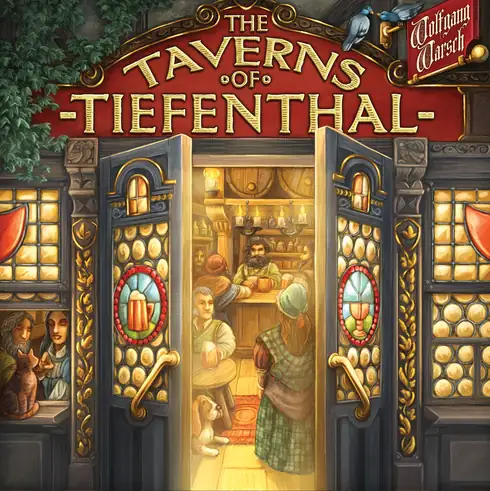
The Taverns of Tiefenthal (from age 12, 2 to 4 people, about 60 minutes) has the same skill areas as Power Grid Recharged, logic and planning as well as numbers and arithmetic. In The Taverns of Tiefenthal, players add up thalers and beer, subtract costs and factor in discounts. The Taverns of Tiefenthal is less suited to players who like to optimise and are bothered by the luck of the dice. Woodcraft (from age 12, 1 to 4 people, about 80 to 150 minutes) also has these two skill areas; in Woodcraft, there is a number puzzle to solve. Woodcraft is less suited to beginners because, according to the publisher, it is an expert game. Power Grid Recharged suits teenagers who enjoy calculating and planning, and families with experience of economic games. Power Grid Recharged is less suited to children who see calculating as a tiresome chore and to groups who want to be finished after an hour.
Sources
- 2F-Spiele: Funkenschlag Recharged Version (publisher’s page, in German)
- 2F-Spiele: Recharged Version rules (PDF, in German)
- 2F-Spiele: Funkenschlag klassische Version (publisher’s page, in German)
- Spiel des Jahres: Funkenschlag (jury, in German)
- Wikipedia (German): Funkenschlag (Spiel)
- Wikipedia (Dutch): Nederlandse Spellenprijs
- Meeple Mountain: review
- Zatu: review
- Hall9000: review of the 2004 new edition (in German)
Frequently asked questions
What age is Power Grid Recharged suitable for?
Power Grid Recharged is recommended from age 12, and the Spiel des Jahres jury rates its demands as high. Players who can estimate costs in their head without calculating becoming a tiresome chore are ready. Anyone who wants to stop after about an hour will find little here.
How long does a game take and how many people can play?
A game takes about 120 minutes. The game is for 2 to 6 people, who play against each other. As soon as someone has connected the set number of cities, the game ends; the winner is whoever supplies the most cities at that point.
What skills can Power Grid Recharged help develop?
It can help develop logic and planning as well as numbers and arithmetic. With every bid and purchase, players weigh up in their heads what the power plant, resources and lines cost together, and the plan changes as soon as other players occupy cities or snap up resources.
What if someone falls far behind?
The game has a built-in catch-up mechanism: whoever is behind buys resources and builds first, and gets cheaper resources. Whoever is in the lead may bid first, but comes last when buying and building and has to weigh up whether this is worth it.