How it plays
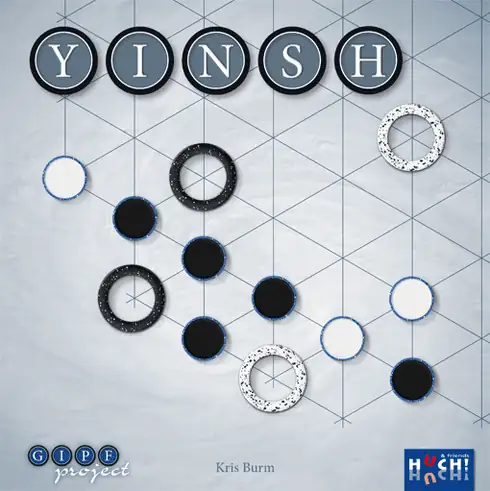
The game is played on the intersections of a grid of lines. First, both players take turns placing their five rings. Then, on each turn, a player places a piece with their own colour face up inside one of their rings. They move that ring in a straight line, possibly over pieces but never over rings. All the pieces jumped over are flipped, both the player’s own and the opponent’s. When five pieces of one colour form a row, the player of that colour removes them from the board, along with one of their own rings. The first player to remove three rings wins.
What it can help develop
A single move can change the colour of several pieces. Beforehand, players have to work out in their heads which colour will be where afterwards, and whether they might accidentally create a row for their opponent. This calls for spatial reasoning and working memory. Then there is the dilemma: each row of your own costs a ring and with it mobility; planning ahead means choosing the right moment for it. Because pieces keep changing colour, plans have to be reassessed constantly.
Especially suitable for
- Strategically minded teenagers from age 13
- Parent-and-teenager duels with no luck factor
- Reversi fans and lovers of abstract duels
Less suitable for
- Anyone looking for a theme, a story or chance
- Impatient players: the board looks confusing at first
Our verdict
YINSH is a worthwhile choice for teenagers from age 13 who enjoy strategy and for duels between parents and teenagers in which no die has a say. In 2004 it was on the Spiel des Jahres recommendation list, and one review praises its simple rules, which give rise to great depth. Its limitations are that there is neither a theme nor chance, it can only be played by two, and the board is hard to take in at first.
Getting started
- Show a move with an example: the ring moves in a straight line, may jump over pieces and must land directly behind them, but never jumps over rings.
- If players know Reversi, use it to explain flipping the pieces that are jumped over; this applies to your own pieces and your opponent’s alike.
- Before each move, check whether it would create a row of five for your opponent, because a player’s row can also come about through the other side’s move.
In detail
Variants and player count
According to the rules on gipf.com, the components are a board, 5 white and 5 black rings and 51 double-sided pieces. Players place the rings on intersections, then put a piece inside one of their own rings and move the ring in a straight line; it may jump over pieces and land directly behind them, but never over rings. Pieces jumped over are flipped, both the player’s own and the opponent’s; a row of five is removed, and the player also takes one of their own rings off the board. The winner is whoever has removed three rings first. To get started, the rules recommend the Blitz variant with one row; according to Reich der Spiele, experienced players can start with one ring fewer.
What reviewers say
According to the Spiel des Jahres database, YINSH was on the recommendation list in 2004. According to Wikipedia, YINSH was among the Mensa Select winners in 2004 and was listed in the Abstract strategy category of the “Games 100” in 2005. Reich der Spiele calls the rules very simple, mastering them an art and the depth enormous. According to Reich der Spiele, weakening yourself keeps the games exciting to the end and provides balance; at first, the beauty of the abstract is hardly recognisable. L’Escale à jeux calls YINSH the most complex game in the series; according to the review, it lacks the elegant simplicity of its predecessors, above all Gipf and Dvonn. Nevertheless, every game is an intense pleasure, the review says.
How it compares
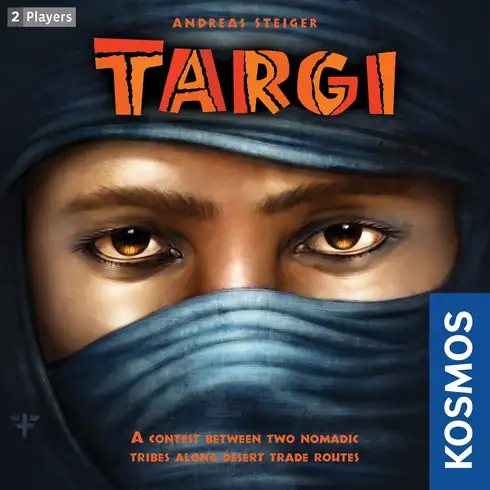
In the catalogue, YINSH (from age 13, 2 people, about 30 to 60 minutes) belongs to the area of logic and planning and is a game for two. So are Jaipur (from age 12, 2 people, about 30 minutes) and Targi (from age 12, 2 people, about 60 minutes). According to the catalogue, Jaipur is a duel for the best deal in which players collect goods at the bazaar and sell them at the right moment, and Targi a tight tactical duel with Tuareg goods. According to the catalogue, YINSH is an abstract duel from the GIPF series in which every row removes one of the player’s own rings.
Sources
Frequently asked questions
What age is YINSH suitable for?
The recommended minimum age is 13. Teenagers who think several moves ahead and like Reversi-style duels are ready. Impatient players find it harder to get started, because the board is hard to take in at first.
How long does a game take and how many people can play?
A game takes about 30 to 60 minutes. The game is for 2 people, who play against each other; the winner is whoever is first to remove three of their rings from the board.
What skills can YINSH help develop?
It can help develop logic and planning. A single move can flip several pieces at once, so players have to think through beforehand whether they might unintentionally create a row for their opponent. In addition, every row formed weakens the player who forms it, because a ring has to leave the board for it.
Does luck play a role?
No, there is neither chance nor a theme; it is a pure battle of wits. Balance arises within the game itself, because every row of your own weakens you, and according to one review this keeps the game exciting to the end.