How it plays
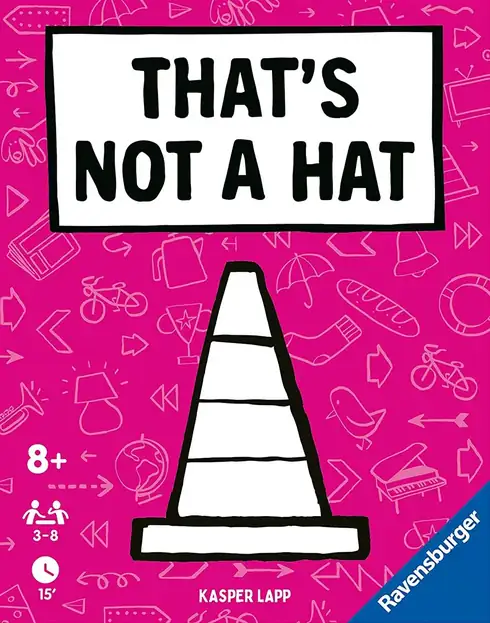
Everyone has a picture card face up in front of them (guitar, broccoli). To start, a new card is shown, turned over and given away. The arrow on the back shows who receives it: “I have a lovely book here for you.” Whoever accepts it passes their older present on face down and announces what it supposedly is. Anyone who doubts it (“That’s not a book!”) reveals the card: whoever was wrong takes the card as a penalty point and gives away a new one. When someone has three penalty points, the game ends; whoever has the fewest wins.
What it can help develop
Working memory is at the centre: new presents can only be seen briefly. After that, players have to keep track of what is with whom and update it with every pass, even when it is not their turn. Objects that have already been passed on interfere and have to be suppressed. Doubting adds perspective-taking: does the player next to you really know what they are giving away, or are they bluffing? And anyone who gets it wrong in front of everyone practises staying calm.
Especially suitable for
- Children from age 8 who love memory games
- Children who enjoy putting on a poker face
- A short start or finish to a games night
Less suitable for
- Children who are embarrassed by making mistakes in front of others
- Large groups looking for light-hearted party fun
Our verdict
That’s not a Hat! is a worthwhile choice for families with children from age 8 who want a short memory and bluffing game, ideally in a small group of around four people. The rules are quick to explain, there is plenty of laughter, and in 2023 it was on the Spiel des Jahres recommendation list. Its limitations are that it is tiring, a few games are usually enough, and it becomes much harder in large groups.
Getting started
- Explain that anyone who doubts an announcement does not have to know the correct object: it is enough to say that the announcement is wrong. Whoever was wrong takes the card as a penalty point.
- Tell children who are embarrassed by mistakes beforehand that everyone gets things wrong: according to reviews, even objects lying face up are announced incorrectly.
In detail
Variants and player count
According to Ravensburger, the box contains 110 cards, and the game is intended for 3 to 8 people from age 8. The rules of that edition are available in German, French, Dutch and Italian. One variant in the rules starts with two presents each. The Spiel des Jahres jury recommends 3 to 6 people; Harald Schrapers of gamesweplay.de thinks about four is best and, despite the stated maximum of 8, does not see it as a game for large groups. Reich der Spiele finds it considerably harder in larger groups, and Spieletest.at says that the difficulty depends heavily on the number of players because more cards are on the table.
What reviewers say
The Spiel des Jahres jury put That’s not a Hat! on the recommendation list in 2023 and calls it an amusing memory game. At the French As d’Or 2023, it was on the shortlist in the Jeu de l’Année category; the winner was Akropolis. Harald Schrapers (gamesweplay.de) praises the fact that it is explained incredibly quickly, has an astonishing flow and is very funny. Udo Bartsch of Rezensionen für Millionen appreciates a lot of game from few rules and strong emotions. He finds it tiring, however: after one to three games in a row, players have had enough, it makes people nervous, and some are embarrassed by their own gaps in memory. The Pöppelkiste website considers it entertaining for two to three games, but not enough to fill a whole evening.
How it compares
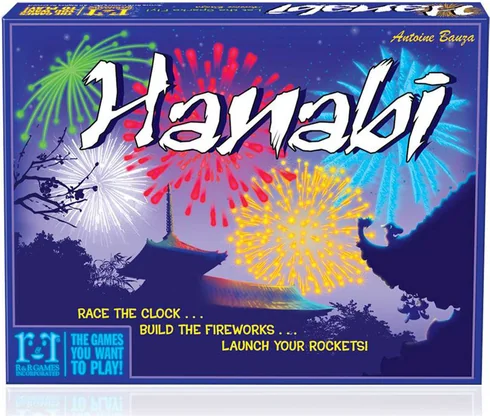
Memoarrr! (from age 8, 2 to 4 people, about 15 minutes), like That’s not a Hat!, calls on working memory. Memoarrr! suits families who find memory (matching pairs) too monotonous, and is less suited to children who find being knocked out early hard to cope with. Hanabi (from age 8, 2 to 5 people, about 25 minutes), like That’s not a Hat!, calls for working memory and perspective-taking. Hanabi suits focused school-age children from age 8 who enjoy puzzling, and is less suited to restless groups. That’s not a Hat!, by contrast, relies on bluffing and suits children who like putting on a poker face; it is less suited to large groups looking for light-hearted party fun.
Sources
- Ravensburger: That’s not a hat (product page, in German)
- Ravensburger: rules (PDF, in German, French, Dutch and Italian)
- Spiel des Jahres: That’s not a hat (jury, in German)
- gamesweplay.de: review (in German)
- Reich der Spiele: review (in German)
- Spieletest.at: review (in German)
- Spiel des Jahres: award winners 2023 (in German)
- Wikipedia (French): As d’Or
- Festival des Jeux Cannes: As d’Or palmarès (in French)
- Rezensionen für Millionen: review (in German)
- Pöppelkiste: review (in German)
Frequently asked questions
What age is That’s not a Hat! suitable for?
The recommended minimum age is 8. A child is ready when they can briefly remember several objects together with their owners and take mistakes in front of everyone calmly. Anyone who is quickly embarrassed by slip-ups will probably get little enjoyment from the game.
How long does a game take and how many people can play?
A game takes about 10 minutes. The game is for 3 to 8 people, who play against each other; according to one review, it works best with about four. The game ends as soon as someone has three penalty points.
What skills can That’s not a Hat! help develop?
It can help develop memory: anyone who has only briefly seen a new object has to remember who is holding what and update this with every pass, even when others are taking their turn. At the same time, players have to block out objects that have already been passed on.
Can the game fill a whole games night?
Probably not. Several reviews consider two or three games in a row to be enough; it is also regarded as tiring and makes some people nervous. It works well to start or end a games night.