 ★ 4.2
Editors' pick
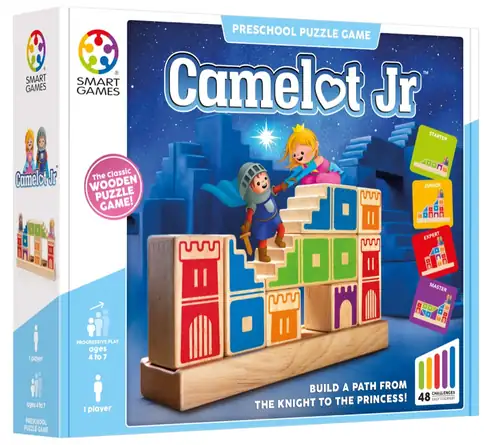
Camelot Jr.
Bring the knight and the princess together: a solo logic game with challenges of increasing difficulty.
At five, many children begin to really enjoy games with fixed rules, although interest and ability vary greatly from child to child. A lot is also happening when it comes to switching between rules: a child who was sorting by colour a moment ago can now switch to sorting by shape. In tests, most children manage this single change of rule at four and a half to five. Switching flexibly between two rules from one task to the next, on the other hand, is usually not possible until the age of seven to nine, and impulse control continues to mature into adolescence.
Board games offer many small opportunities to practise these executive functions: impulse control (inhibition), working memory and cognitive flexibility. In some reaction games, only a player who spots two matching pictures may react. In Spooky Stairs and My First Stone Age, players have to remember what is hidden under the ghosts or the face-down tiles. One-player puzzle games such as Rush Hour Junior or Camelot Jr. require thinking moves ahead, and in Animal Upon Animal a steady hand counts.
When choosing, it helps to look at your child: do they like speed, puzzling things out or building? Look for short games: most of the games here take 10 to 20 minutes. Also look for rules your child can explain on their own after a few games, and for challenges that get harder as soon as your child becomes more confident.
★ 4.2Bring the knight and the princess together: a solo logic game with challenges of increasing difficulty.
 ★ 4.2
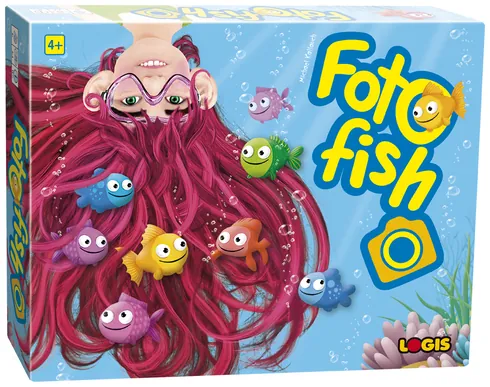
Find the fish shown on the dice in your own aquarium and “photograph” them as quickly as possible: a search-and-speed game for children.
 ★ 4.2
Guessing taco, kitten or pizza and turning over the card: when a Candy card appears, everyone slaps the middle. A reaction game for children.
 Ages 4+★ 4.2
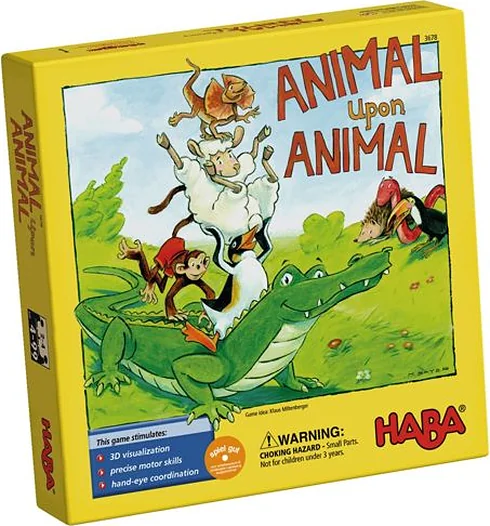
Crocodile carries sheep carries penguin: the classic stacking game for steady hands and a good eye.
Editors' pickAges 4+★ 4.2Bring the knight and the princess together: a solo logic game with challenges of increasing difficulty.
Editors' pickAges 4+★ 4.2Find the fish shown on the dice in your own aquarium and “photograph” them as quickly as possible: a search-and-speed game for children.
Editors' pickEveryone rummages through a wild heap of socks at the same time, looking for pairs: searching fun at high speed.
Editors' pickMemorise a picture for ten seconds, then answer questions about it: a memory game in a pocket-sized box.
Editors' pick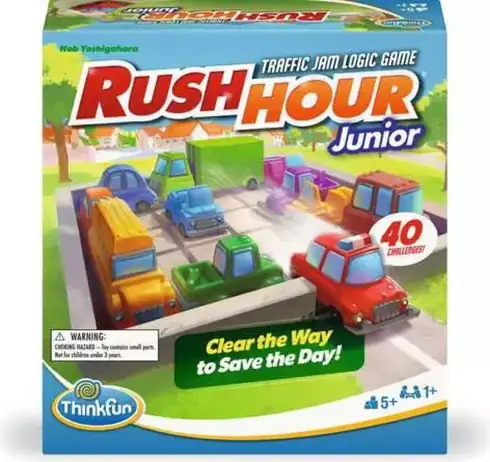 Ages 5+★ 4.0
The ice cream van is stuck: a sliding puzzle with logic challenges across four levels.
Editors' pickAges 4+★ 4.2Guessing taco, kitten or pizza and turning over the card: when a Candy card appears, everyone slaps the middle. A reaction game for children.
Editors' pick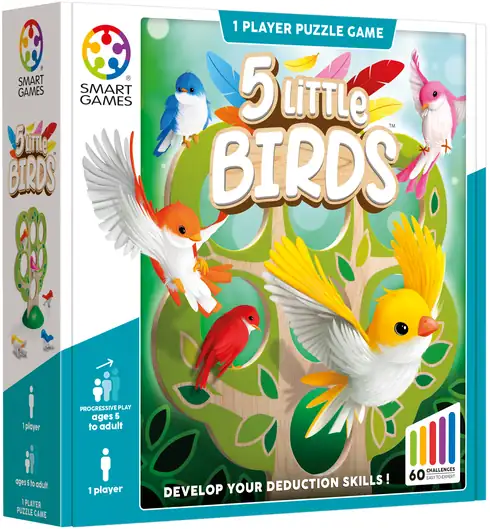 Ages 5+★ 4.0
Clip the birds onto the tree exactly as each challenge specifies: a charming solo logic game with challenges of increasing difficulty.
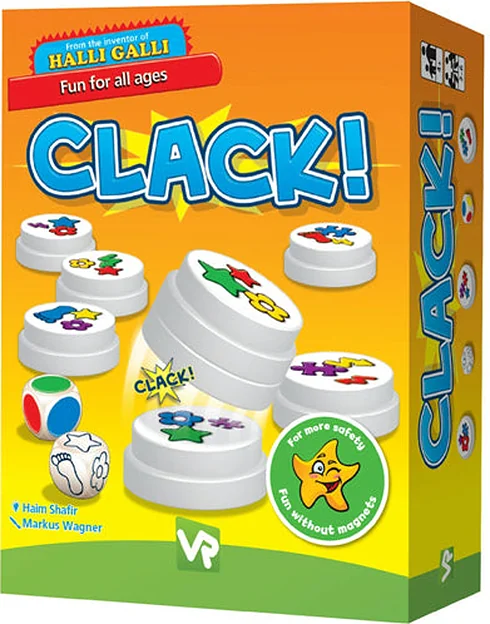 Ages 4+★ 4.2
After the dice are rolled, quickly collect the matching colour and symbol discs, which stick to each other: a fast perception game.
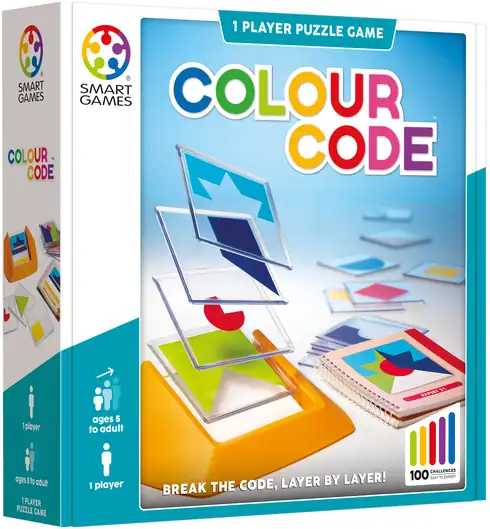 Ages 5+★ 3.8
Stack transparent shape cards in the right order until the target picture appears: a solo puzzle in spatial perception.
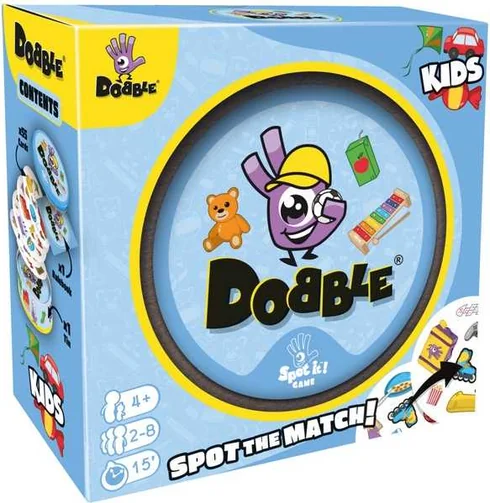 Ages 4+★ 4.0
The simpler animal version of the classic symbol game: spotting the same animal on two cards. An ideal first quick-recognition game from age 4.
 Ages 4+★ 3.9
Roll the dice, then race to grab the piece in the colour and shape shown: a fast-paced perception and reaction game.
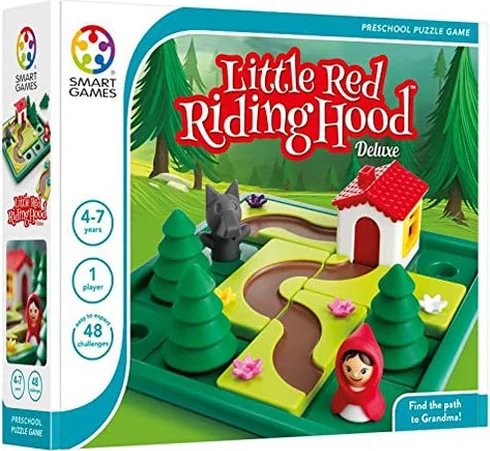 Ages 4+★ 4.0
Lay path pieces so that Little Red Riding Hood reaches her grandmother safely: a charming solo logic game with progressively harder challenges.
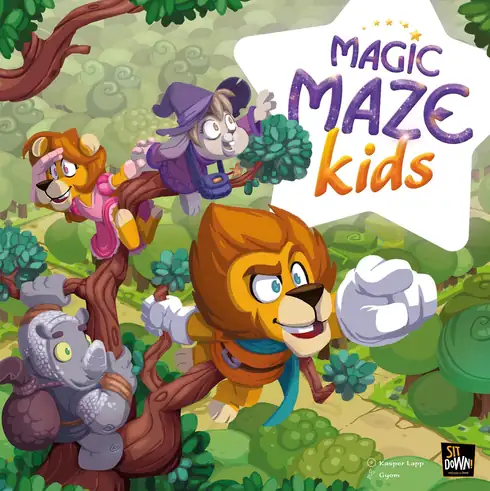 Ages 5+★ 4.2
Guide figures through the maze together, each person only in their own directions: a cooperative game without fixed turns in which talking is allowed.
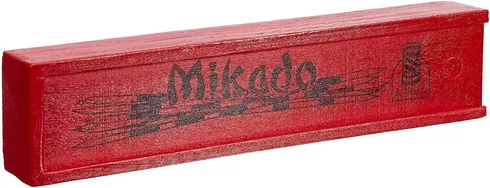 Ages 4+★ 4.0
Pull sticks out of the pile one at a time without moving any of the others: steady hands and patience in a timeless game of dexterity.
 Ages 5+★ 3.6
The children's version: remember tiles, collect goods and build your very first hut. Memory and planning for children as young as five.
Climb the haunted stairs with your figures, but remember who is who under the ghost hats: a classic memory game for children.
Here you will find all the games in our collection for which the publisher gives a minimum age of 4 or 5: easy games to get started with as well as games that challenge five-year-olds. Each of them has its own review on this website, with a description of how it plays and a skills profile. The recommended age remains a guide: whether a game suits your child also depends on their patience, preferences and experience of playing games.
Above all, the executive functions: impulse control (holding back an impulse), working memory (keeping information in mind and working with it) and cognitive flexibility (adapting your thinking when something changes). According to a widely cited review, they are even more important for school readiness than IQ or early reading and number skills. A game remains an opportunity to practise, not a guarantee.
Yes. Between the ages of three and six, children only gradually learn to understand and follow rules. If a child follows their own rules, they usually do not mean to cheat; they are simply not ready yet. At this age, they do not yet need to know how to lose either. It helps if an adult plays along, and short games mean the rematch comes quickly. It also works with no opponents at all: in the one-player puzzle games, nobody loses.
Yes, five puzzle games in this selection are made for one person, including Camelot Jr., Rush Hour Junior, Little Red Riding Hood Deluxe and Colour Code. Their challenges range from an easy start to tricky brain-teasers; in the editions reviewed, Rush Hour Junior has 40 and Camelot Jr. has 48. Logic puzzles like these, in which rules have to be applied, become interesting between the ages of five and seven and call on working memory and flexibility. Increase the difficulty step by step: without growing demands, practice brings hardly any progress.
The age on the box is a recommended minimum age, not an upper limit. Many games from age 4 remain appealing for five-year-olds: reaction games get faster the quicker everyone at the table is, and puzzle games such as Camelot Jr. grow with the child through their challenges. They are also a good start for children who are only just getting into games with rules. If your child is looking for more of a challenge, you will find the next step among the games from age 6.