 ★ 4.2
Editors' pick
Can't Stop
Combine dice cleverly and advance on up to three routes, but whoever keeps rolling too greedily loses the whole turn. A classic of weighing risks.
Numbers and arithmetic start long before the first maths workbook: comparing quantities, counting things out, putting numbers in order of size, calculating in your head. Comparing lengths and estimating the chances of winning are also part of mathematics. And anyone who calculates in their head holds intermediate results in working memory.
Board games let children repeat the same thinking steps many times, with a clear goal and feedback from the other players. In a Swiss study, children aged around six played guided card and board games about quantities and numbers for eight weeks. They made more progress than a comparison group whose daily routine continued as usual.
From age 6, players in Fruit Punch add up the fruit and ring the bell when there are exactly five of the same kind; in Rat-a-Tat Cat, they try to keep their own points total low. From age 8, players in Pickomino secure or risk the total of their dice, and in The Game: Quick & Easy they work together to lay down cards in ascending and descending order. In 6 nimmt!, players have to fit numbers up to 104 into rows.
Choose a number range that challenges your child without discouraging them. An element of luck gives children who still calculate more slowly a real chance of winning too. Children who freeze under time pressure are better off starting with a calm or cooperative game than with Fruit Punch.
★ 4.2Combine dice cleverly and advance on up to three routes, but whoever keeps rolling too greedily loses the whole turn. A classic of weighing risks.
Exactly five of the same fruit? Ring the bell! The reaction classic par excellence, and secret practice in grasping quantities.
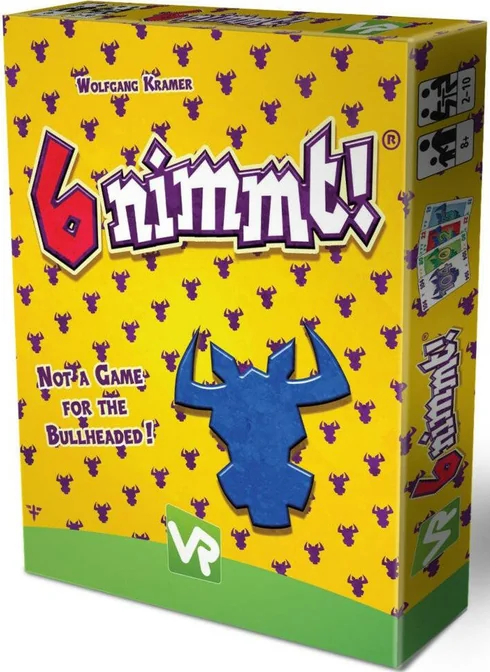 ★ 4.0
Whoever lays the sixth card collects the row: number logic, a feel for risk and delightful gloating.
Ages 8+★ 4.0Whoever lays the sixth card collects the row: number logic, a feel for risk and delightful gloating.
Editors' pick Ages 6+★ 3.9
Turn over cards and slap lightning-fast when the right picture appears: a boisterous reaction and card game for the whole family.
Editors' pick Ages 8+★ 3.8
Keep your face-down cards as low as possible, swap cleverly and call “Cabo” at the right moment: memory meets bluffing.
Editors' pickAges 7+★ 4.2Combine dice cleverly and advance on up to three routes, but whoever keeps rolling too greedily loses the whole turn. A classic of weighing risks.
Editors' pickExactly five of the same fruit? Ring the bell! The reaction classic par excellence, and secret practice in grasping quantities.
Editors' pick Ages 10+★ 4.0
Two players launch expeditions and lay cards in ascending order, but every expedition started must first earn back its cost of 20 points. A thrilling duel.
Editors' pick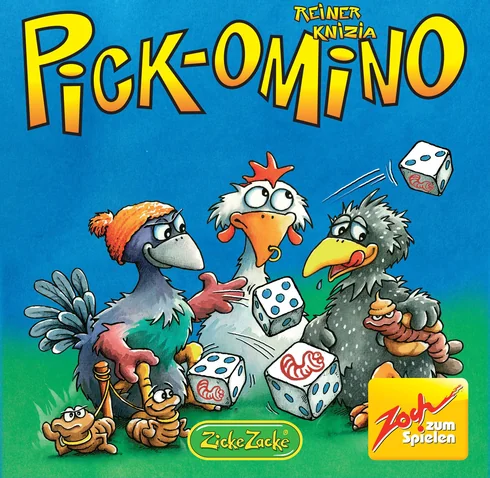 Ages 8+★ 3.9
Roll, add up, take a gamble: keep rolling or secure the worm? Weighing risks, with an addictive streak.
Editors' pick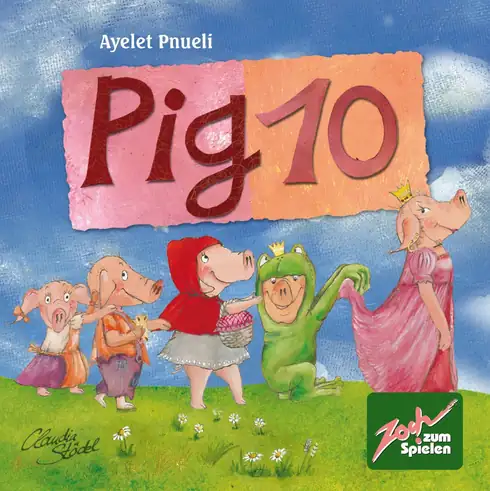 Ages 6+★ 3.9
Lay down cards and count aloud: whoever hits exactly 10 scoops up the cards. A brisk number game for mental arithmetic.
Editors' pick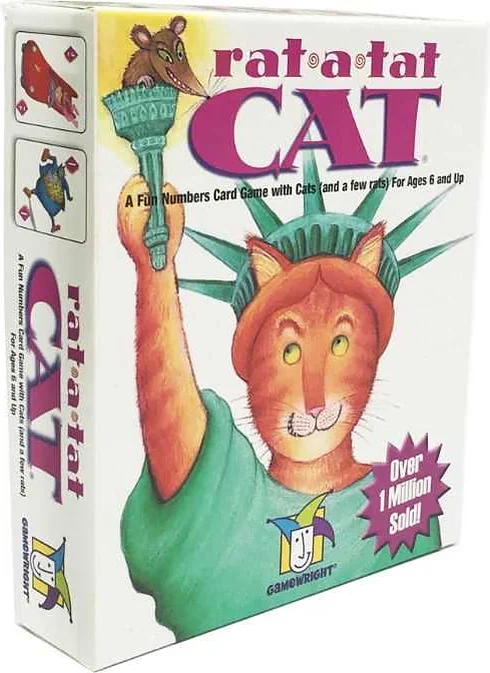 Ages 6+★ 3.9
Keep your face-down cards low: whoever forgets which card is where swaps their way to ruin.
Editors' pick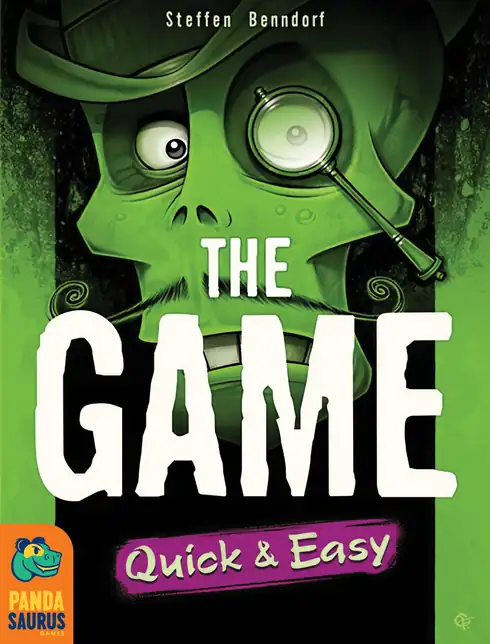 Ages 8+★ 3.9
Together against the deck: play all the cards in ascending or descending order. Talking is allowed, but giving away numbers is not.
Editors' pick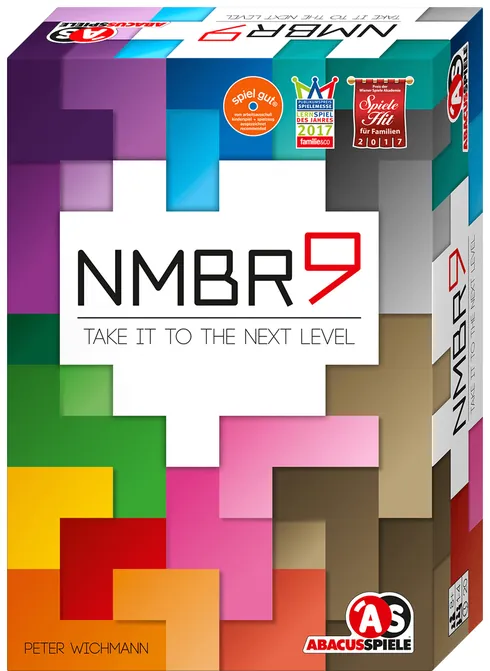 Ages 8+★ 4.0
Stack number tiles: the higher you build, the more you score. A clever spatial tile-laying game with no board, just brainpower.
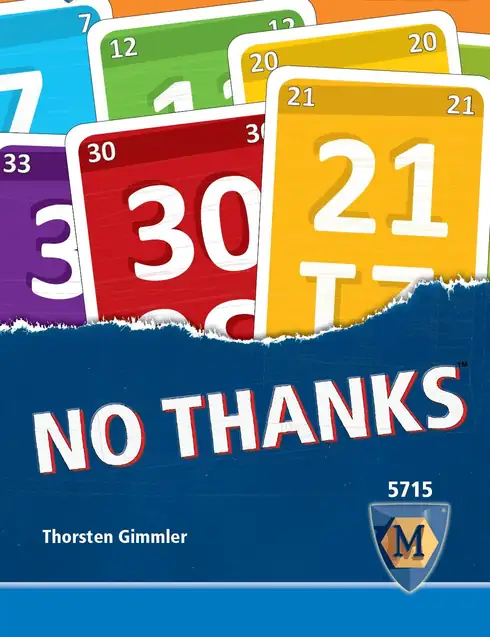 Ages 8+★ 4.2
Take the card or pass it on with a token? Keep your score as low as possible: a minimalist push-your-luck game with surprising depth.
 Ages 8+★ 4.2
Choose cards, lay them out in three rows and let gardens in bloom score points: elegantly simple, with subtle timing.
 Ages 12+★ 3.8
Build a power network, bid for power plants and buy resources cleverly: a demanding economic classic for strategy fans.
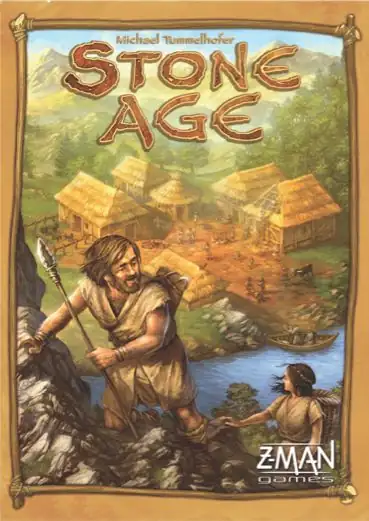 Ages 10+★ 4.2
Sending workers out into a prehistoric world, gathering resources and building huts: an accessible introduction to development strategy games.
 Ages 12+★ 4.0
Expand your own taproom, attract guests and cleverly combine cards with dice: an accessible building game with an ever-growing engine.
 Ages 12+★ 3.8
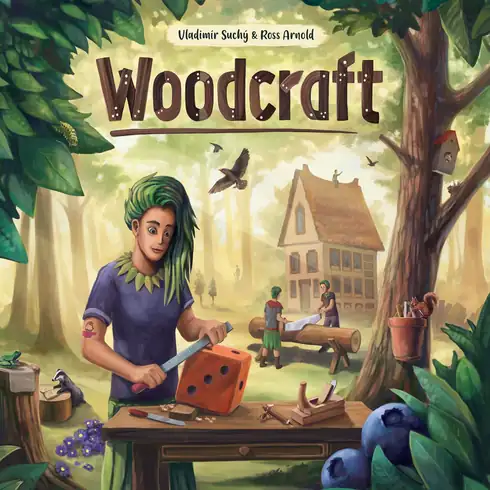
Run a carpentry workshop by getting wood, sawing, gluing and fulfilling orders precisely: a well-thought-out dice puzzle for experienced players.
Here you will find all the games in our collection that we have assigned to the numbers and arithmetic skill area. They range from games for young children to the card game with numbers up to 104. Each of them has its own review on this website, with a description of how it plays and a skills profile. The recommended ages come from the publishers.
Games complement practice, but they do not replace teaching. In one study, preschool children from low-income families played a simple number board game for about an hour. Afterwards, they were better at counting, comparing and recognising numbers, and still were nine weeks later. The same game with colours instead of numbers brought no improvement. An analysis of 18 studies on such number board games found a small effect overall. So if you want your child to practise numbers specifically, choose games in which numbers really feature.
Children aged 4 to 6 already play with lengths and quantities. Being able to recite the numbers up to ten does not yet mean being able to count. In a study with two- to four-year-olds, many answered “How many?” with the last number they had counted, without having understood how counting works. Between the ages of six and eight, children learn to place numbers up to 100 evenly on a number line. In this selection, Fruit Punch and Rat-a-Tat Cat are recommended from age 6.
Quite a lot. Anyone who calculates in their head holds intermediate results in working memory, such as the values of the face-down cards in Rat-a-Tat Cat. In Fruit Punch, inhibition comes in too: holding back your hand when there are four or six fruits. In one study, working memory, inhibition and cognitive flexibility were each independently linked to children's maths performance. These are correlations: they do not prove that a game will improve a child's maths results.
Games are practice, not targeted support. In the Swiss study mentioned above, children who started out weaker tended to gain more with a structured training programme than without one. Children who started out stronger, on the other hand, tended to gain more with the games than with the training. If difficulties persist, talk to your child's teachers. At home, games with an element of luck or cooperative games in which nobody loses alone are a good choice. And let your child count on instead of starting again at one: in one study, five- and six-year-olds learned more from a number board game that way.