 ★ 4.4
Editors' pick
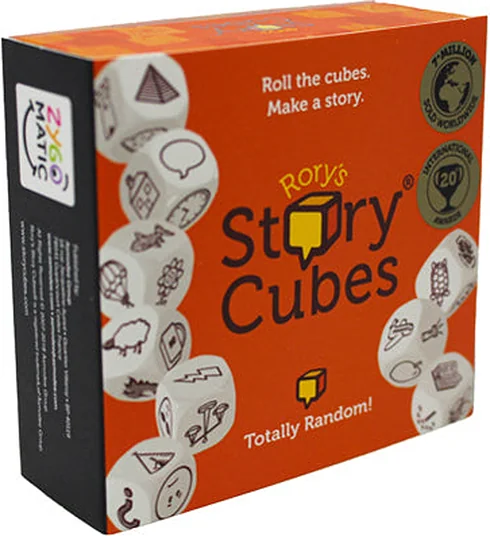
Rory's Story Cubes
Nine picture dice, endless stories: a storytelling game with no winners or losers.
At seven, most children are in their first few years of school, and it shows at the table. They increasingly think logically about concrete things and keep several features of a situation in view at the same time. Many now enjoy games with more rules, in which the outcome depends not only on the luck of the dice but on a plan of their own.
Behind this are the executive functions: impulse control (inhibition), working memory and cognitive flexibility. They continue to develop into adolescence and are linked to reading and maths performance during the school years. Board games challenge them along the way: in Fruit Punch or Jungle Speed, players have to strike at the right moment and keep their hand still at the wrong one. In Blokus or Abalone, players think moves ahead and change their plan as soon as an opponent gets in the way. In Can't Stop, players decide after every roll whether to keep taking the risk or secure what they have. One-player puzzle games such as the IQ series challenge spatial reasoning, an ability that can be improved through practice.
Three questions help when choosing: is your child more drawn to speed, puzzling things out or teamwork? Can the difficulty be increased as your child becomes more confident? And is a game short enough for your child to stay focused? Most of the games here with a fixed playing time take about 10 to 30 minutes per game.
★ 4.4Nine picture dice, endless stories: a storytelling game with no winners or losers.
 ★ 4.3
Everyone builds their own word grid at the same time: Scrabble without a board, but with speed instead.
 ★ 4.3
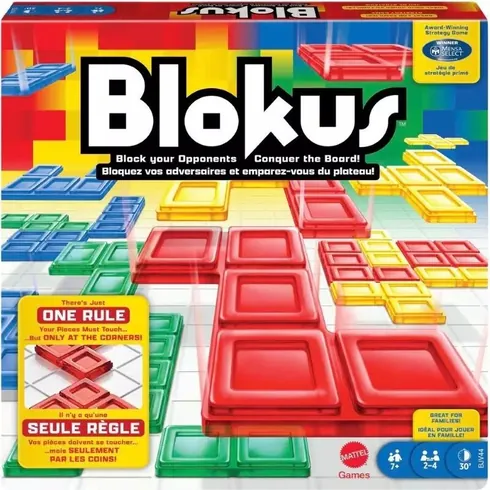
Get all your pieces onto the board, with each new one touching your own only at a corner. Pure spatial strategy.
 Ages 6+★ 3.9
Turn over cards and slap lightning-fast when the right picture appears: a boisterous reaction and card game for the whole family.
Editors' pickAges 7+★ 4.3Everyone builds their own word grid at the same time: Scrabble without a board, but with speed instead.
Editors' pick Ages 6+★ 4.2
Work together to block the escape routes of Bandido: a cooperative tile-laying game from Switzerland.
Editors' pick Ages 6+★ 3.7
Use the magnetic wand to fish out only your own bells: a delicate touch meets a careful weighing of risks.
Editors' pickAges 7+★ 4.3Get all your pieces onto the board, with each new one touching your own only at a corner. Pure spatial strategy.
Editors' pick Ages 7+★ 4.2
Combine dice cleverly and advance on up to three routes, but whoever keeps rolling too greedily loses the whole turn. A classic of weighing risks.
Editors' pickStack the little chairs ever higher without the tower toppling: a wobbly dexterity game for steady hands.
Editors' pick Ages 6+★ 4.2
Say “lettuce” when there is a pepper on the pile: a Stroop test turned party game, and wonderfully tricky.
Editors' pick Ages 6+★ 4.0
Move coloured balls between test tubes until they match the formula, without touching them. Pace meets a delicate touch.
Editors' pickExactly five of the same fruit? Ring the bell! The reaction classic par excellence, and secret practice in grasping quantities.
Editors' pick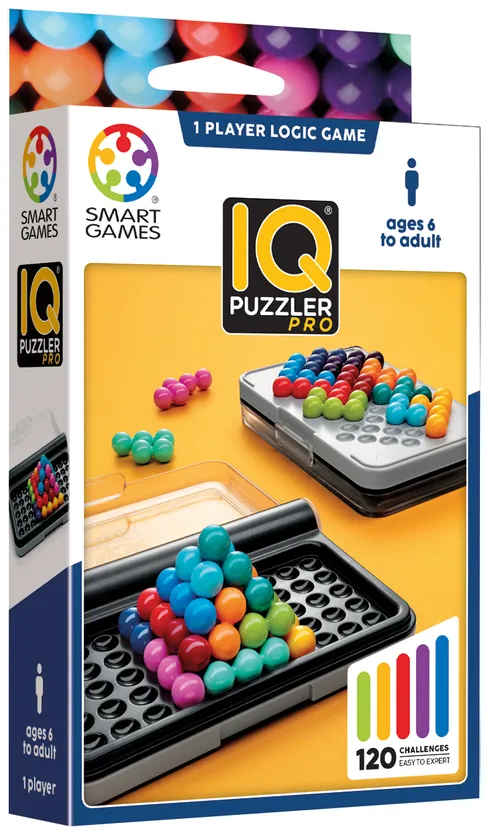 Ages 6+★ 3.8
The versatile travel-sized puzzle for on the go: challenges in 2D and 3D.
Editors' pick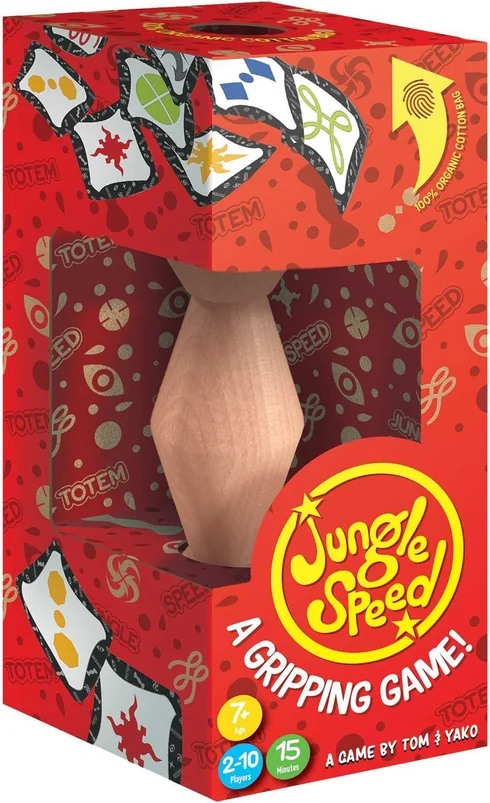 Ages 7+★ 4.2
Matching symbols? Grab the totem in a flash, but the symbols are fiendishly similar.
Editors' pick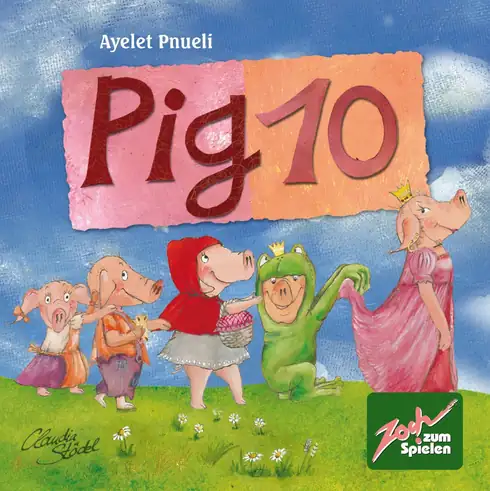 Ages 6+★ 3.9
Lay down cards and count aloud: whoever hits exactly 10 scoops up the cards. A brisk number game for mental arithmetic.
Editors' pick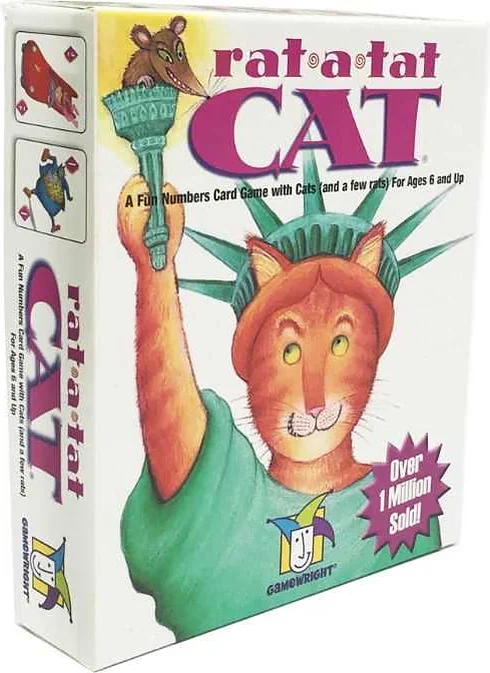 Ages 6+★ 3.9
Keep your face-down cards low: whoever forgets which card is where swaps their way to ruin.
Editors' pickAges 6+★ 4.4Nine picture dice, endless stories: a storytelling game with no winners or losers.
Editors' pick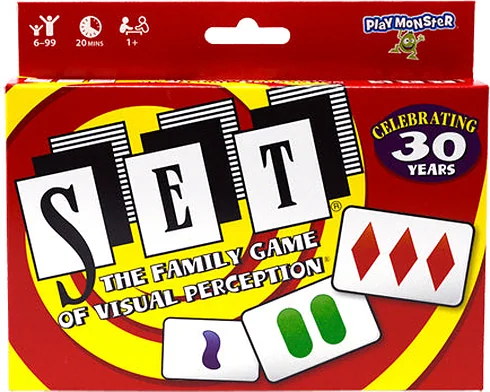 Ages 6+★ 4.1
Four features, one glance: whoever spots a valid set first may take it. Concentration in its purest form.
Editors' pick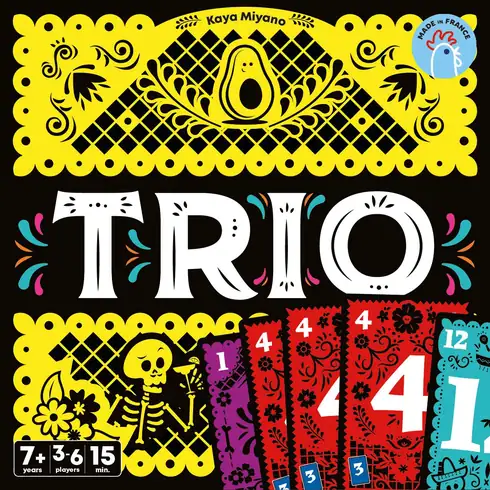 Ages 7+★ 4.0
Revealing hidden numbers and collecting three of a kind: whoever keeps track and guesses boldly wins. A simple, punchy game idea.
Editors' pick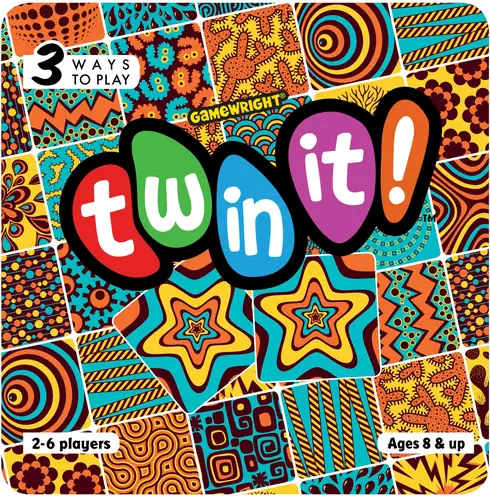 Ages 6+★ 4.3
Spot two identical patterns among many similar ones in a flash and pounce: a fast-paced perception game for sharp eyes.
Editors' pick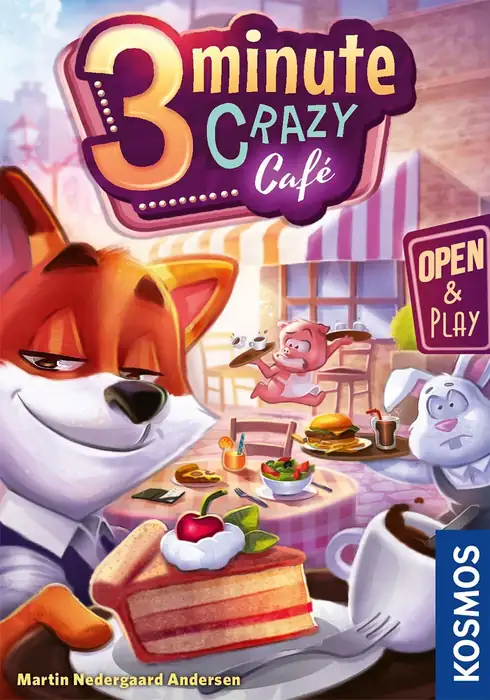 Ages 7+★ 4.1
Work through the café orders together in three rounds of three minutes each: a hectic cooperative game against the clock.
 Ages 7+★ 4.0
Push rows of marbles and gradually force the opponent's marbles off the board: a clear-cut abstract duel for supremacy.
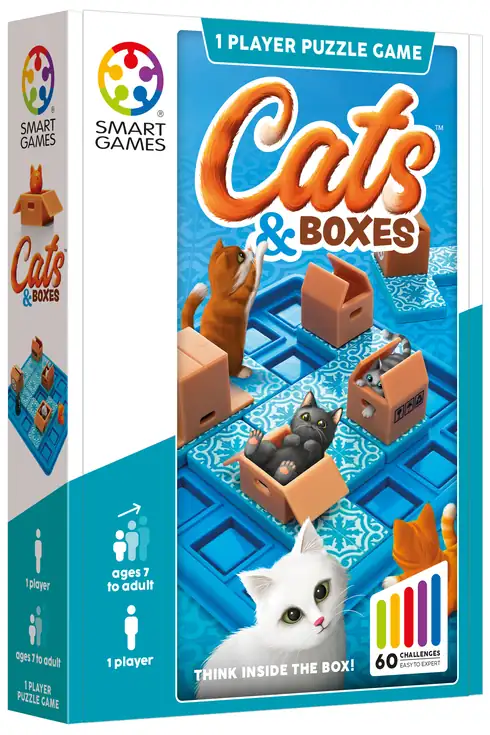 Ages 7+★ 3.8
Move the boxes so that in the end every cat is sitting in a box: a cute solo game of spatial logic.
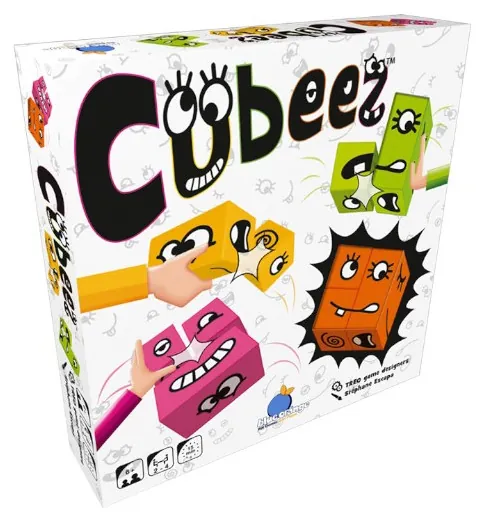 Ages 6+★ 4.0
Turn your cubes in a flash until they show exactly the pattern on the card: a fast-paced game of perception and reaction.
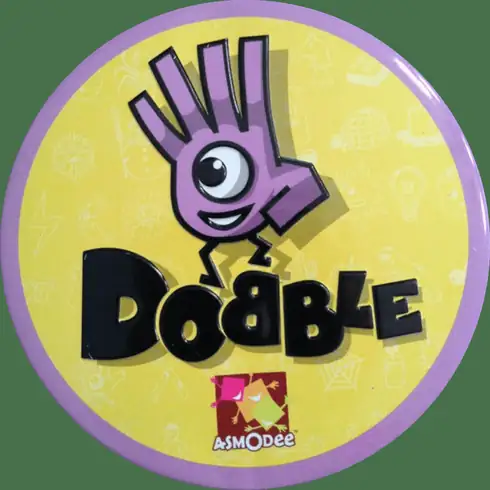 Ages 6+★ 4.0
Any two cards share exactly one symbol: whoever spots and names it first wins the card. Lightning-fast perception in a pocket-sized game.
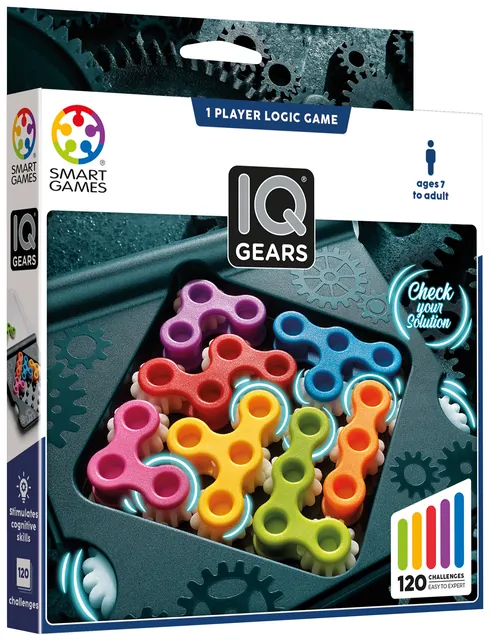 Ages 7+★ 3.8
Fit the interlocking gear pieces onto the travel board without leaving gaps: a compact solo puzzle game with challenges that get harder.
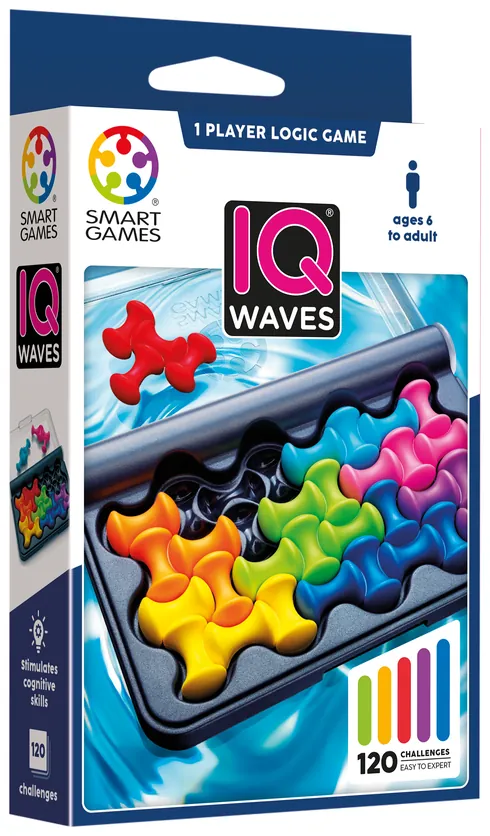 Ages 6+★ 4.0
Fit all the wave-shaped pieces onto the travel board without leaving gaps: a compact solo puzzle game.
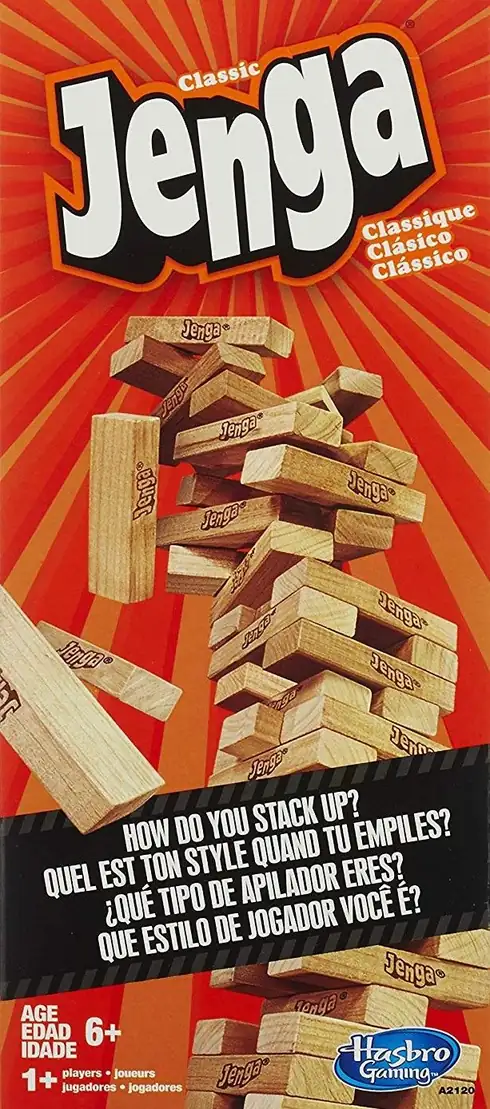 Ages 6+★ 4.3
Pull blocks out of the wobbly tower and place them on top until it topples: pure suspense and fine motor skills.
Help the rabbits jump cleverly over foxes and mushrooms into the free holes: a bouncy solo logic game.
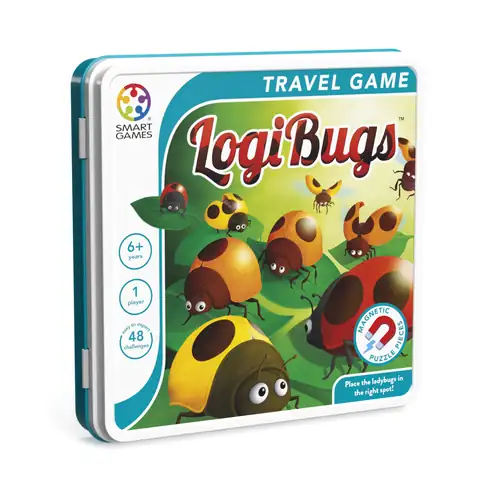 Ages 6+★ 4.0
Use the clues to work out logically where each beetle belongs on the grid: a beginner-friendly solo deduction game.
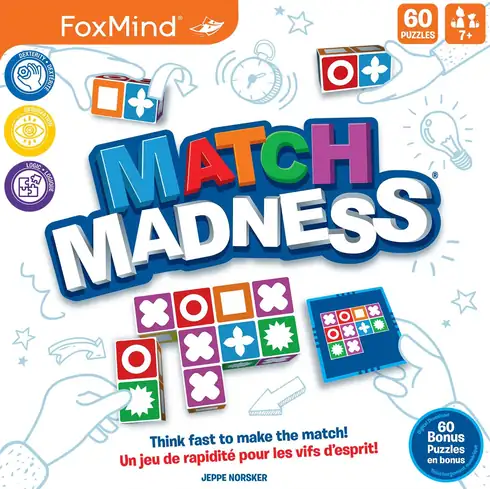 Ages 7+★ 4.1
Race to arrange your own blocks so that they match the pattern card exactly: a fast game of spatial perception.
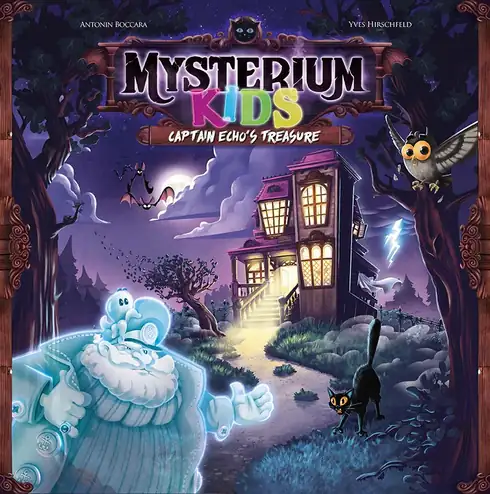 Ages 6+★ 4.3
A ghost gives clues only with sounds on a tambourine, and the team has to work out together what is meant. Cooperative puzzling for children.
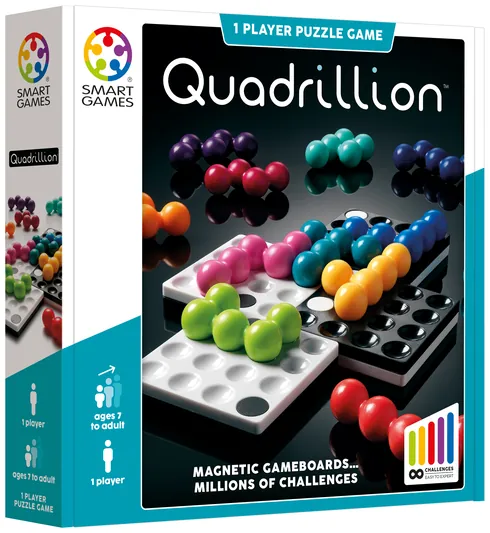 Ages 7+★ 4.0
Arranging magnetic boards freely and then fitting in every piece without gaps: a spatial solo puzzle with almost endless variations.
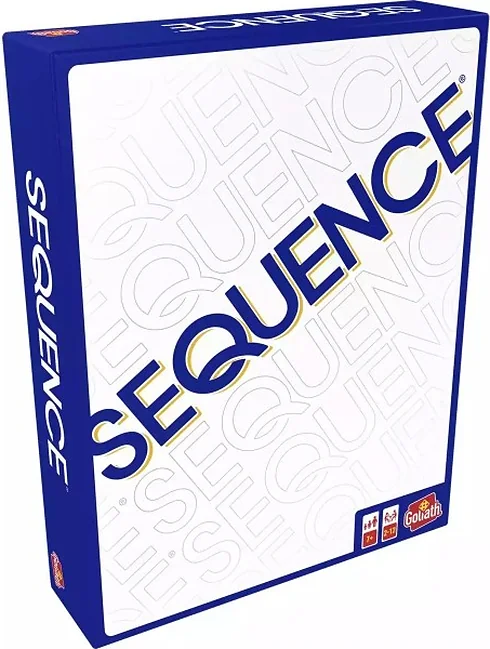 Ages 7+★ 3.9
Use the cards in your hand to claim matching spaces on the board and get five tokens in a row: a card game and a board game in one.
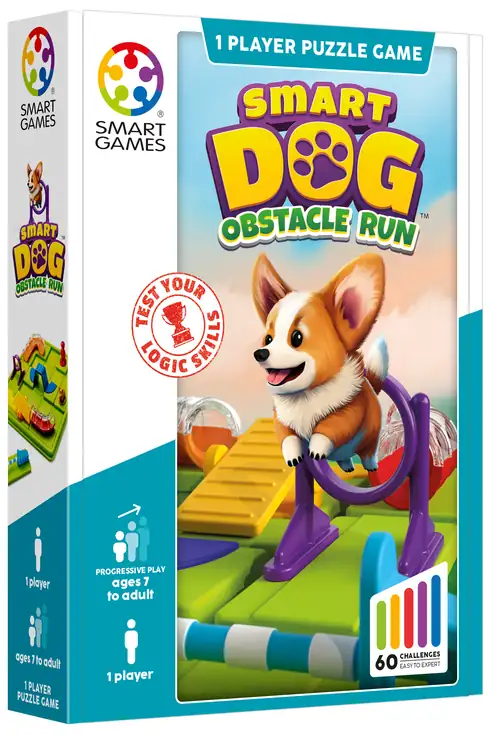 Ages 7+★ 4.0
Place obstacles so that the dog finds a course all the way to its trainer: a cute solo logic game with lots of challenges.
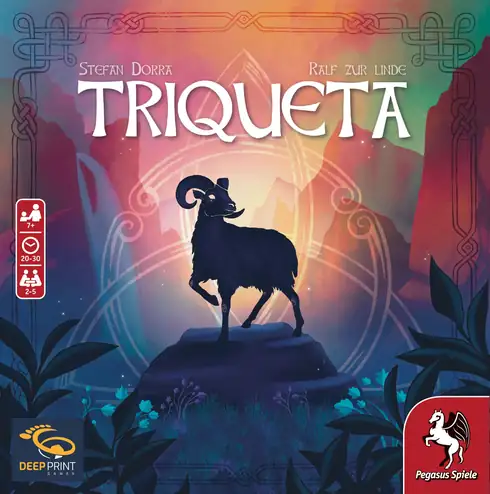 Ages 7+★ 3.8
Boldly collect sets of three tiles and secure them at the right moment: an accessible push-your-luck tile-laying game for the whole family.
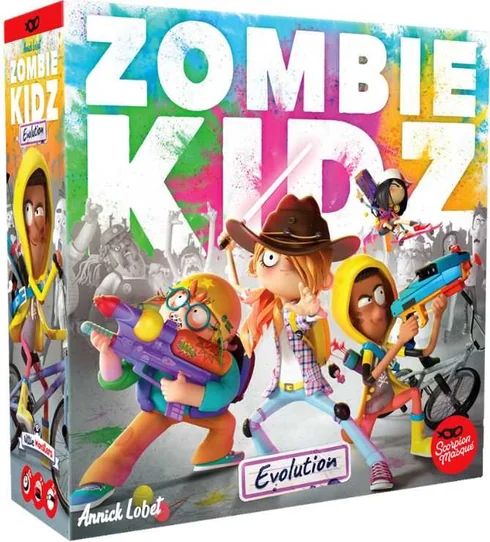 Ages 7+★ 4.0
Lock the school gates as a team and chase away zombies before they overrun the school: a beginner-friendly cooperative adventure for children.
This page lists all the games in our collection that the publisher recommends from age 6 or age 7: games your child will master straight away and games they are just growing into. The recommended age on the box is what counts. Each game has its own review on this website, with a description of how it plays and a skills profile.
This is what developmental psychology calls three basic skills of self-regulation. Impulse control (inhibition) means holding back a spontaneous reaction. Working memory keeps information in mind and works with it. Cognitive flexibility means adapting your thinking when the situation changes. They continue to mature into adolescence and can be practised at any age. Strategy, card and reaction games offer many opportunities for this in everyday life.
The age on the box is a minimum age recommended by the publisher, not an upper limit. Many games from age 6 remain exciting for seven-year-olds because their speed, tactics or puzzle levels grow with the child. That is why this page shows games marked 6 or 7. If your child already has plenty of experience of games and is looking for more of a challenge, you will find the next step among the games from age 8.
Yes, part of the selection is made for one person: puzzle games such as the IQ series, Cats & Boxes, LogiBugs or Quadrillion. They work with challenge booklets, challenge cards or templates that usually range from easy starter puzzles to tricky challenges. This lets your child progress at their own pace and increase the difficulty themselves. That fits the recommendation to raise the demands step by step at this age.
Cooperative games take away the pressure of competition because everyone wins or loses together. In this selection, examples include Bandido, Mysterium Kids: Captain Echo's Treasure and Zombie Kidz Evolution. Short rounds also help: in fast games such as Dobble, a lost round is soon over, and the next chance comes straight away. Games in which you weigh up risks, such as Can't Stop, are good for talking afterwards about luck and decisions.