 ★ 4.2
Editors' pick
Can't Stop
Combine dice cleverly and advance on up to three routes, but whoever keeps rolling too greedily loses the whole turn. A classic of weighing risks.
Impulse control means not following your first impulse, but pausing briefly and doing what the situation requires: waiting, holding your hand back, resisting a temptation, not taking out your anger on another player. Experts count it as part of inhibition, one of the three core executive functions alongside working memory and cognitive flexibility. Young children find it particularly hard; it improves a great deal in the preschool years and continues to mature into adolescence. A long-term study of a thousand children suggests how important it can be. Those who were better at controlling their impulses between the ages of 3 and 11 earned more on average as adults, even with the same intelligence and background.
Many board games call for this self-control again and again, often with immediate feedback. In games where players hit a bell, such as Fruit Punch, the hand has to strike at the right moment and stay still at the wrong one. In Cockroach Salad, it is often precisely the obvious answer that is not allowed. In push-your-luck games such as Can't Stop or Diamant, the winner is whoever stops in time. Bluffing games such as Skull require players not to give anything away.
The recommended ages are a guide: from age 4 there are simple reaction games and junior editions, from around age 7 push-your-luck games, and from age 8 to 10 bluffing and trick-taking games. What matters more is that a game challenges children without overwhelming them and becomes harder over time.
★ 4.2Combine dice cleverly and advance on up to three routes, but whoever keeps rolling too greedily loses the whole turn. A classic of weighing risks.
Grab the right object, or the one that is not shown at all: reaction speed and impulse control under time pressure.
Exactly five of the same fruit? Ring the bell! The reaction classic par excellence, and secret practice in grasping quantities.
 Ages 6+★ 3.9
Turn over cards and slap lightning-fast when the right picture appears: a boisterous reaction and card game for the whole family.
Editors' pick Ages 6+★ 3.7
Use the magnetic wand to fish out only your own bells: a delicate touch meets a careful weighing of risks.
Editors' pick Ages 8+★ 3.8
Keep your face-down cards as low as possible, swap cleverly and call “Cabo” at the right moment: memory meets bluffing.
Editors' pickAges 7+★ 4.2Combine dice cleverly and advance on up to three routes, but whoever keeps rolling too greedily loses the whole turn. A classic of weighing risks.
Editors' pick Ages 6+★ 4.2
Say “lettuce” when there is a pepper on the pile: a Stroop test turned party game, and wonderfully tricky.
Editors' pickExactly five of the same fruit? Ring the bell! The reaction classic par excellence, and secret practice in grasping quantities.
Editors' pickGrab the right object, or the one that is not shown at all: reaction speed and impulse control under time pressure.
Editors' pick Ages 7+★ 4.2
Matching symbols? Grab the totem in a flash, but the symbols are fiendishly similar.
Editors' pick Ages 10+★ 4.0
Two players launch expeditions and lay cards in ascending order, but every expedition started must first earn back its cost of 20 points. A thrilling duel.
Editors' pickEveryone rummages through a wild heap of socks at the same time, looking for pairs: searching fun at high speed.
Editors' pick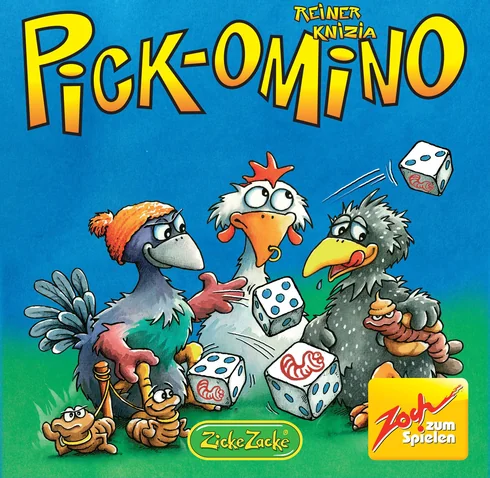 Ages 8+★ 3.9
Roll, add up, take a gamble: keep rolling or secure the worm? Weighing risks, with an addictive streak.
Editors' pickReveal ships and secure your winnings before you push your luck too far: an exciting push-your-luck card game in a pirate harbour.
Editors' pick Ages 13+★ 4.1
Explain a term without using the five most obvious words: creative paraphrasing against the ticking clock, as a team.
Editors' pick Ages 4+★ 4.2
Guessing taco, kitten or pizza and turning over the card: when a Candy card appears, everyone slaps the middle. A reaction game for children.
Editors' pick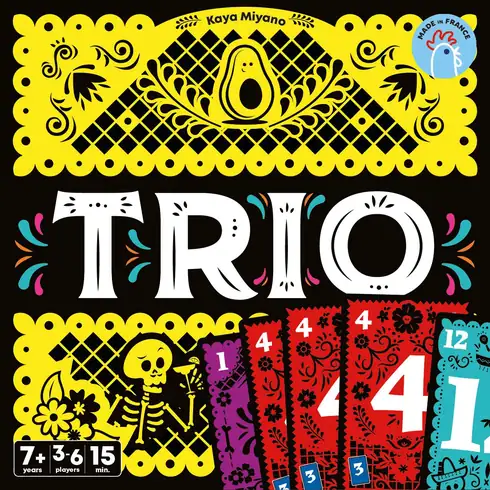 Ages 7+★ 4.0
Revealing hidden numbers and collecting three of a kind: whoever keeps track and guesses boldly wins. A simple, punchy game idea.
Editors' pick Ages 8+★ 4.3
Draw a tile and decide: keep the visible character or flip it and hope for the other side? A light push-your-luck game with pirate charm.
 Ages 8+★ 4.2
Push deeper into the mine or get out with the loot in time? A shared risk in which greed is often punished.
 Ages 10+★ 4.0
Play cards and snatch the same number of lower cards from the other players: a mean, fast card-shedding game by Kramer and Kiesling.
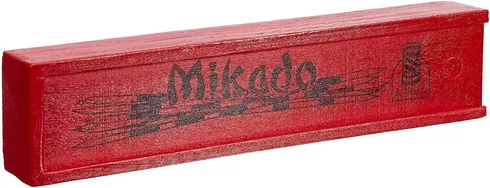 Ages 4+★ 4.0
Pull sticks out of the pile one at a time without moving any of the others: steady hands and patience in a timeless game of dexterity.
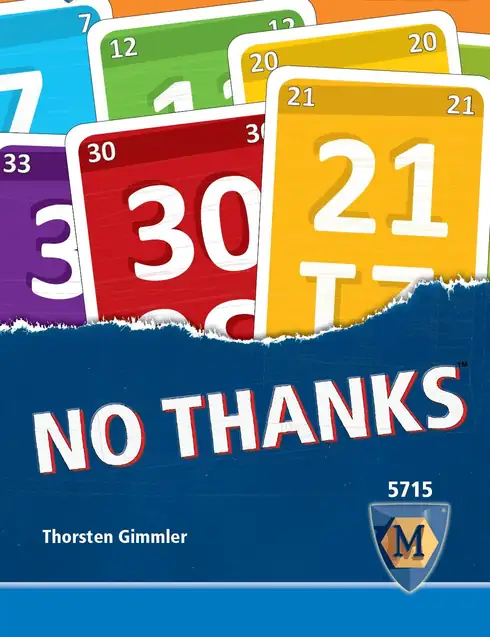 Ages 8+★ 4.2
Take the card or pass it on with a token? Keep your score as low as possible: a minimalist push-your-luck game with surprising depth.
 Ages 10+★ 4.2
Lay a rose or a skull face down and bid how many discs you can turn over blind: a pure battle of bluff and nerves.
 Ages 8+★ 3.8
Predict your tricks exactly and fight with pirate trumps: a lively trick-taking game with plenty of gloating.
The classic word game with categories as a fast card game: find words for a letter and a category in a flash, vocabulary under time pressure.
 Ages 8+★ 4.0
Take turns flipping cards and saying the words in sequence; when picture and word match, everyone slaps as fast as they can. Delightfully silly reaction chaos.
 Ages 10+★ 4.0
A trick-taking game for two with clever special cards, but anyone who greedily takes too many tricks ends up empty-handed. A fine tactical duel.
 Ages 8+★ 4.0
Play cards in ascending order without saying a word: the team has to develop a silent feel for one another. Fascinatingly unusual.
 Ages 7+★ 3.8
Boldly collect sets of three tiles and secure them at the right moment: an accessible push-your-luck tile-laying game for the whole family.
Here you will find all the games in our collection that we have assigned to the impulse control skill area. They range from first reaction games from age 4 to bluffing and tactical games from age 10 and Taboo from age 13. Each of them has its own review on this website, with a description of how it plays and a skills profile. The recommended ages come from the publishers.
Impulse control is the ability not to give in straight away to a strong urge or a temptation, but to do what is appropriate at that moment. It concerns behaviour, such as waiting until it is your turn or not taking a toy away from another child, but also feelings: not lashing out straight away when your feelings have been hurt. Research counts it as part of inhibition, one of the three core executive functions. It also includes not blurting out the first answer that comes to mind.
This develops step by step. Between the ages of three and five, self-regulation and executive functions make great progress, but younger children still need a lot of support from adults when learning rules. Holding back remains disproportionately hard for children for a long time; this ability continues to mature into adolescence. This selection starts with simple games from age 4 and goes up to bluffing games from age 10 and Taboo from age 13.
That is typical: younger children often react too quickly and give the obvious answer, even when a different one is required. If you help them wait a moment, they make fewer mistakes. Turn the cards over more slowly at first, or agree on a rule: look first, then ring the bell. A small picture card showing the current rule next to the pile can also help children remember it.
In Can't Stop, players can keep going as long as they like, but one unlucky roll can cost them everything they have gained in that turn. The temptation to try one more time is strong; anyone who wants to win has to stop in time and secure their haul. This is exactly what research describes as self-control: resisting a temptation and not acting impulsively. Children experience first-hand what greed costs.